Etymologie, Etimología, Étymologie, Etimologia, Etymology
UK Vereinigtes Königreich Großbritannien und Nordirland, Reino Unido de Gran Bretaña e Irlanda del Norte, Royaume-Uni de Grande-Bretagne et d'Irlande du Nord, Regno Unito di Gran Bretagna e Irlanda del Nord, United Kingdom of Great Britain and Northern Ireland
Literatur, Littérature, Literature

A

A bed of roses

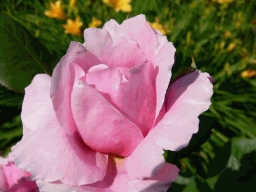
Die Redewendung "A bed of roses" bezeichnet eine "angenehme, leichte Situation".

Im Jahr 1599, 6 jahre nach dem Tod von Christopher Marlowe, erschien in dessen "The Passionate Shepherd To His Love", ein Gedicht, in dem auch die Zeile "And I will make thee beds of roses" zu finden ist. Marlowe meint diese Beschreibung noch ganz wörtlich. Erst in der Folge nahm der Ausdruck die übertragene Bedeutung an.

In dem 1999 erschienen Film "American Beauty" wird die Beschreibung jedoch noch einmal ganz wörtlich genommen.

(E?)(L?) http://www.bachlund.org/Live_with_me_and_be_my_love.htm

Live With Me - (1997)
Christopher Marlowe and Sir Walter Raleigh (last verse), quoted by William Shakespeare
for low or medium voice and piano


(E?)(L?) http://www.cineclub.de/filmarchiv/2000/american_beauty.html
(E?)(L?) http://www.djfl.de/entertainment/djfl/1105/110600.html
(E?)(L?) http://www.icons.org.uk/theicons/collection/the-rose/features/the-rose-in-english-poetry-finished

The Rose in English Poetry (16th-18th century)
The rose is one of the most widely used symbolic devices in English literature. It stands primarily for love, for love’s passion and beauty, for its constancy and simultaneously its perishability.
...


(E1)(L1) http://www.kurma.net/essays/e2.html
Cooking with Kurma: A Bed of Roses

(E?)(L?) http://www.moviemaze.de/filme/2/american-beauty.html
Hier gibt's auch einen kleinen Trailer. Aber das Rosenbett ist nicht zu sehen.

(E?)(L1) http://www.phrases.org.uk/meanings/59650.html
(E?)(L?) http://www.youtube.com/watch?v=UO3SOb7cuPE
Come Live With Me by Christopher Marlowe

Erstellt: 2010-02

A rose by any other name would smell as sweet
A rose by any other name (W3)

Die Zeile "A rose by any other name would smell as sweet", die auch gelegentlich nur als "A rose by any other name" angedeutet wird, stammt aus "Romeo and Juliet" (1600) von William Shakespeare. Damit wird ausgedrückt, dass es darauf ankommt, was etwas ist, nicht wie es benannt wird.

Hinter Shakespeares Ausdruck vermutet man auch einen Seitenhieb ab das mit seinem "Globe Theatre" konkurrierende "Rose Theatre".

Die Redewendung wird auch heute noch vielfach zitiert oder spielerisch abgewandelt, wie etwa als "A Nose by Any Other Name Is Still a Nose".

(E?)(L1) http://eu.dummies.com/how-to/content/napoleons-josephine-a-rose-by-any-other-name.html

Napoleon's Josephine: A Rose by Any Other Name

Napoleon's greatest love would come from the Caribbean island of Martinique. Napoleon never went there, but this woman's father, Joseph Gaspard Tascher de la Pagerie, owned a sugar plantation, complete with slaves, on the island. The family had significant wealth and power, and the children led a very comfortable life in an idyllic location.

"Marie Josèphe Rose Tascher de la Pagerie" was born on June 23, 1763. If you noticed that there is no "Josephine" in her name, you may wonder how that name came about. Her friends and family had always called her "Rose", but Napoleon, never content to just go with the flow, called her "Josephine" (from "Josèphe"), and that is how she will be forever known.
...


(E6)(L?) http://www.jpc.de/jpcng/home/search?fastsearch=A%20Rose%20By%20Any%20Other%20Name


(E?)(L1) http://www.phrases.org.uk/meanings/305250.html


(E1)(L1) http://www.worldwidewords.org/articles/rose.htm
Hier findet man einige interessante Benennungen, die auf Grund falscher Übersetzung entstanden.


A rose by any other name: Losing something in translation?

One of the things that makes us the human beings we are is a powerfully-developed pattern-matching facility. Momentarily spot a profile in half light and the person is instantly recognised; listen to someone at a crowded party and we can usually “join up the dots” between half-heard snatches of speech and turn it into a meaningful statement. But sometimes this superb ability tries hard to make sense of something that is too alien for it and nonsense results.
...


Erstellt: 2010-02

abebooks
Advanced Book Exchange (ABE)

AbeBooks.co.uk

about
Shakespeare Glossary

(E?)(L?) http://shakespeare.about.com/library/blglossary.htm

The Shakespeare Glossary
Below is a glossary of old and unusual words used in Shakespeare's plays. I am currently working on a glossary and annotations for each play. The glossary for Macbeth can be found here.


(E?)(L?) http://shakespeare.about.com/library/blglossA.htm


about
Shakespeare's Influence on the English Language

(E?)(L?) http://shakespeare.about.com/library/weekly/aa042400a.htm

Shakespeare's Influence
The English language owes a great debt to Shakespeare. He invented over 1700 of our common words by Below is a list of a few of the words Shakespeare coined, hyperlinked to the play and scene from which it comes. When the word appears in multiple plays, the link will take you to the play in which it first appears.

academe | accused | addiction | advertising | amazement | arouse | assassination | backing | bandit | bedroom | beached | besmirch | birthplace | blanket | bloodstained | barefaced | blushing | bet | bump | buzzer | caked | cater | champion | circumstantial | cold-blooded | compromise | courtship | countless | critic | dauntless | dawn | deafening | discontent | dishearten | drugged | dwindle | epileptic | equivocal | elbow | excitement | exposure | eyeball | fashionable | fixture | flawed | frugal | generous | gloomy | gossip | green-eyed | gust | hint | hobnob | hurried | impede | impartial | invulnerable | jaded | label | lackluster | laughable | lonely | lower | luggage | lustrous | madcap | majestic | marketable | metamorphize | mimic | monumental | moonbeam | mountaineer | negotiate | noiseless | obscene | obsequiously | ode | olympian | outbreak | panders | pedant | premeditated | puking | radiance | rant | remorseless | savagery | scuffle | secure | skim | milk | submerge | summit | swagger | torture | tranquil | undress | unreal | varied | vaulting | worthless

Essentials


absoluteshakespeare
Shakespeare Glossary

(E?)(L?) http://www.absoluteshakespeare.com/

Plays | Sonnets | Poems | Quotes | Summaries | Essays | Glossary | Links

Absolute Shakespeare, the essential resource for William Shakespeare's plays, sonnets, poems, quotes, biography and the legendary Globe Theatre.


(E?)(L?) http://www.absoluteshakespeare.com/glossary/a.htm
The Absolute "Shakespeare Glossary" is a "dictionary for Shakespeare", it explains the meanings of the words the Bard uses that are not in common use today.

Alice in Wonderland, Alice in Wonderland syndrome, Lilliput sight (W3)

(E?)(L?) http://en.wikipedia.org/wiki/Alice_Liddell
(E?)(L?) http://en.wikipedia.org/wiki/Alice_in_Wonderland
(E?)(L?) http://en.wikipedia.org/wiki/Alice_in_Wonderland_syndrome
Die Namens-Patin für "Alice in Wonderland", "Alice Liddell", war die Jugendliebe von "Charles Lutwidge Dodgson", der das Werk 1865 unter seinem Pseudonym "Lewis Carroll" herausgab.
"Alice Pleasance Liddell" (May 4, 1852 - November 16, 1934) was the inspiration for the heroine of the children's classic "Alice's Adventures in Wonderland" by Lewis Carroll (pen name of "Charles Lutwidge Dodgson").

Nach dieser Geschichte, in der ja viele Tiere auftreten, wurde später ein bestimmtes Krankheitsbild benannt.

"Alice in Wonderland syndrome" ("AIWS"), or "micropsia", is a disorienting neurological condition which affects perception by the human eye.
Sufferers perceive objects (including animals and other humans, or parts of humans, animals, or objects) as appearing substantially smaller than in reality. Generally, the object appears far away at the same time. For example, a family pet, such as a dog, may appear the size of a mouse, or a normal car may look shrunk to scale.
This leads to another name for the condition, namely, "Lilliput sight". The condition is in terms of perception only; the mechanics of the eye are not affected, only the brain's interpretation of information passed from the eyes.
...
The disorder is named after Lewis Carroll's "Alice's Adventures in Wonderland", where the title character experiences many situations similar to those of micropsia and macropsia. Since it is known that Carroll suffered from migraines, there is some speculation that he might have written that work from direct experience.

amazon.co.uk
Widgets

(E?)(L1) http://widgets.amazon.co.uk/
Take tag clouds one step further by showing Product Clouds - clusters of product titles relevant to your page.

(E?)(L1) http://widgets.amazon.co.uk/Amazon-Product-Cloud-Widget/


author, authority (W3)

(E?)(L?) http://www.abanet.org/ceeli/publications/other_pubs/hickson_texas_int_law.pdf
Cf. ELIZABETH TONKIN, NARRATING OUR PASTS: THE SOCIAL CONSTRUCTION OF ORAL HISTORY 39
(1992). Tonkin notes that the link between power and story-telling is connected at the level of language, for the words "authority" and "author" have a common etymology.

B

barnesandnoble
Barnes & Nobles
Etymologie-Literatur
Etymology-Literatur

(E?)(L?) http://www.barnesandnoble.com/
(E?)(L?) http://www.bn.com/
(E?)(L?) http://books.barnesandnoble.com/search/results.aspx?WRD=Etymologie
(E?)(L?) http://books.barnesandnoble.com/search/results.aspx?WRD=Etymology


bartleby004
Milton, John
Complete Poems Written in English

(E?)(L?) http://www.bartleby.com/hc/
(E?)(L?) http://www.bartleby.com/4/

Harvard Classics, Vol. 4
The Complete Poems of John Milton
Written in English
John Milton
Paradise Lost and Regained—among the greatest epic poems of any age—combined with the full array of Milton’s English works secure his eternal place among the poet laureate pantheon.

CONTENTS
Bibliographic Record
NEW YORK: P.F. COLLIER & SON COMPANY, 1909–14
NEW YORK: BARTLEBY.COM, 2001

Contents


(E?)(L?) http://www.bartleby.com/4/index1.html

John Milton. (1608–1674). Complete Poems.
The Harvard Classics. 1909–14.
Contents
Introductory Note
Poems Written at School and at College, 1624–1632 Poems Written at Horton, 1632–1638 Poems Written During the Civil War and the Protectorate, 1642–1658 Paradise Lost, 1658–1663
The Verse | The First Book | ... | The Twelfth Book

Paradise Regained, 1665–1667
The First Book | ... | The Fourth Book

Samson Agonistes, 1667–1671
Milton’s Introduction
Lines 1–249 | ... | Lines 1500–1761


(E?)(L?) http://www.bartleby.com/4/index2.html

John Milton. (1608–1674). Complete Poems.
The Harvard Classics. 1909–14.
Index to Titles


(E?)(L?) http://www.bartleby.com/4/index3.html

John Milton. (1608–1674). Complete Poems.
The Harvard Classics. 1909–14.
Index to First Lines


(E?)(L?) http://www.bartleby.com/people/Milton-J.html
John Milton

bartleby006
Burns, Robert
Poems and Songs

(E?)(L?) http://www.bartleby.com/hc/
(E?)(L?) http://www.bartleby.com/6/

Harvard Classics, Vol. 6
The Poems and Songs of Robert Burns
Robert Burns
The most lauded poet of Scotland, Burns had a love of his nation’s songs, like Auld Lang Syne, which has been infectious ever since the world over. The musical highland dialect in the 557 works is translated in a glossary of over 1,900 words and phrases.

CONTENTS
Bibliographic Record
NEW YORK: P.F. COLLIER & SON COMPANY, 1909–14
NEW YORK: BARTLEBY.COM, 2001


(E?)(L?) http://www.bartleby.com/6/index1.html

Robert Burns. (1759–1796). Poems and Songs.
The Harvard Classics. 1909–14.

Contents


(E?)(L?) http://www.bartleby.com/6/index2.html

Robert Burns. (1759–1796). Poems and Songs.
The Harvard Classics. 1909–14.
Index to Titles


(E?)(L?) http://www.bartleby.com/6/index3.html

Robert Burns. (1759–1796). Poems and Songs.
The Harvard Classics. 1909–14.
Index to First Lines


(E?)(L?) http://www.bartleby.com/6/1002.html

Robert Burns (1759–1796). Poems and Songs.
The Harvard Classics. 1909–14.
Glossary


(E?)(L?) http://www.bartleby.com/people/Burns-Ro.html
Robert Burns

bartleby070
The Oxford Shakespeare

(E?)(L?) http://www.bartleby.com/70/
Edited by W. J. Craig
The 1914 Oxford edition of the Complete Works of William Shakespeare ranks among the most authoritative published this century. The 37 plays, 154 sonnets and miscellaneous verse constitute the literary cornerstone of Western civilization.
CONTENTS
Bibliographic Record
LONDON: OXFORD UNIVERSITY PRESS, 1914
NEW YORK: BARTLEBY.COM, 2000

Plays Poetry

(E?)(L?) http://www.bartleby.com/70/index2.html

Index of First Lines


bartleby211
Volume I. From the Beginnings to the Cycles of Romance

(E?)(L?) http://www.bartleby.com/cambridge/
(E?)(L?) http://www.bartleby.com/211/index.html

THE CAMBRIDGE HISTORY OF ENGLISH AND AMERICAN LITERATURE
An Encyclopedia in Eighteen Volumes
Volume I: English FROM THE BEGINNINGS TO THE CYCLES OF ROMANCE
Edited by A. W. Ward & A. R. Waller
Bibliographic Record
CONTENTS: Preface | Table of Principal Dates


bartleby212
II. The End of the Middle Ages

(E?)(L?) http://www.bartleby.com/cambridge/
(E?)(L?) http://www.bartleby.com/212/index.html

THE CAMBRIDGE HISTORY OF ENGLISH AND AMERICAN LITERATURE
An Encyclopedia in Eighteen Volumes
Volume II: English - THE END OF THE MIDDLE AGES
Edited by A. W. Ward & A. R. Waller
Bibliographic Record
CONTENTS: Preface | Table of Principal Dates


bartleby213
III. Renascence and Reformation

(E?)(L?) http://www.bartleby.com/cambridge/
(E?)(L?) http://www.bartleby.com/213/index.html

THE CAMBRIDGE HISTORY OF ENGLISH AND AMERICAN LITERATURE
An Encyclopedia in Eighteen Volumes
Volume III: English - RENASCENCE AND REFORMATION
Edited by A. W. Ward & A. R. Waller
Bibliographic Record
CONTENTS: Preface | Table of Principal Dates


bartleby214
IV. Prose and Poetry from Sir Thomas North to Michael Drayton

(E?)(L?) http://www.bartleby.com/cambridge/
(E?)(L?) http://www.bartleby.com/214/index.html

THE CAMBRIDGE HISTORY OF ENGLISH AND AMERICAN LITERATURE
An Encyclopedia in Eighteen Volumes
Volume IV: English - PROSE AND POETRY - SIR THOMAS NORTH TO MICHAEL DRAYTON
Edited by A. W. Ward & A. R. Waller
Bibliographic Record
CONTENTS: Note | Table of Principal Dates


bartleby215
V. The Drama to 1642: Part I

(E?)(L?) http://www.bartleby.com/cambridge/
(E?)(L?) http://www.bartleby.com/215/index.html

THE CAMBRIDGE HISTORY OF ENGLISH AND AMERICAN LITERATURE
An Encyclopedia in Eighteen Volumes
Volume V: English - THE DRAMA TO 1642 - Part One
Edited by A. W. Ward & A. R. Waller
Bibliographic Record
CONTENTS: Preface | Table of Principal Dates


bartleby216
VI. The Drama to 1642: Part II

(E?)(L?) http://www.bartleby.com/cambridge/
(E?)(L?) http://www.bartleby.com/216/index.html

THE CAMBRIDGE HISTORY OF ENGLISH AND AMERICAN LITERATURE
An Encyclopedia in Eighteen Volumes
Volume VI: English - THE DRAMA TO 1642 - Part Two
Edited by A. W. Ward & A. R. Waller
Bibliographic Record
CONTENTS: Table of Principal Dates


bartleby217
VII. Cavalier and Puritan

(E?)(L?) http://www.bartleby.com/cambridge/
(E?)(L?) http://www.bartleby.com/217/index.html

THE CAMBRIDGE HISTORY OF ENGLISH AND AMERICAN LITERATURE
An Encyclopedia in Eighteen Volumes
Volume VII: English - CAVALIER AND PURITAN
Edited by A. W. Ward & A. R. Waller
Bibliographic Record
CONTENTS: Table of Principal Dates


bartleby218
VIII. The Age of Dryden

(E?)(L?) http://www.bartleby.com/cambridge/
(E?)(L?) http://www.bartleby.com/218/index.html

THE CAMBRIDGE HISTORY OF ENGLISH AND AMERICAN LITERATURE
An Encyclopedia in Eighteen Volumes
Volume VIII: English - THE AGE OF DRYDEN
Edited by A. W. Ward & A. R. Waller
Bibliographic Record
CONTENTS: Prefatory Note | Table of Principal Dates


bartleby219
IX. From Steele and Addison to Pope and Swift

(E?)(L?) http://www.bartleby.com/cambridge/
(E?)(L?) http://www.bartleby.com/219/index.html

THE CAMBRIDGE HISTORY OF ENGLISH AND AMERICAN LITERATURE
An Encyclopedia in Eighteen Volumes
Volume IX: English - FROM STEELE AND ADDISON TO POPE AND SWIFT
Edited by A. W. Ward & A. R. Waller
Bibliographic Record
CONTENTS: Preface | Table of Principal Dates


bartleby220
X. The Age of Johnson

(E?)(L?) http://www.bartleby.com/cambridge/
(E?)(L?) http://www.bartleby.com/220/index.html

THE CAMBRIDGE HISTORY OF ENGLISH AND AMERICAN LITERATURE
An Encyclopedia in Eighteen Volumes
Volume X: English - THE AGE OF JOHNSON
Edited by A. W. Ward & A. R. Waller
Bibliographic Record
CONTENTS: Prefatory Note | Table of Principal Dates


bartleby221
XI. The Period of the French Revolution

(E?)(L?) http://www.bartleby.com/cambridge/
(E?)(L?) http://www.bartleby.com/221/index.html

THE CAMBRIDGE HISTORY OF ENGLISH AND AMERICAN LITERATURE
An Encyclopedia in Eighteen Volumes
Volume XI: English - THE PERIOD OF THE FRENCH REVOLUTION
Edited by A. W. Ward & A. R. Waller
Bibliographic Record
CONTENTS: Prefatory Note | Table of Principal Dates


bartleby222
XII. The Romantic Revival

(E?)(L?) http://www.bartleby.com/cambridge/
(E?)(L?) http://www.bartleby.com/222/index.html

THE CAMBRIDGE HISTORY OF ENGLISH AND AMERICAN LITERATURE
An Encyclopedia in Eighteen Volumes
Volume XII: English - THE ROMANTIC REVIVAL - The Nineteenth Century, I
Edited by A. W. Ward & A. R. Waller
Bibliographic Record
CONTENTS: Preface | Table of Principal Dates


bartleby223
XIII. The Victorian Age: Part I

(E?)(L?) http://www.bartleby.com/cambridge/
(E?)(L?) http://www.bartleby.com/223/index.html

THE CAMBRIDGE HISTORY OF ENGLISH AND AMERICAN LITERATURE
An Encyclopedia in Eighteen Volumes
Volume XIII: English - THE VICTORIAN AGE - Part One - The Nineteenth Century, II
Edited by A. W. Ward & A. R. Waller
Bibliographic Record
CONTENTS: Prefatory Note | Table of Principal Dates


bartleby224
XIV. The Victorian Age: Part II

(E?)(L?) http://www.bartleby.com/cambridge/
(E?)(L?) http://www.bartleby.com/224/index.html

THE CAMBRIDGE HISTORY OF ENGLISH AND AMERICAN LITERATURE
An Encyclopedia in Eighteen Volumes
Volume XIV: English - THE VICTORIAN AGE - Part Two - The Nineteenth Century, III
Edited by A. W. Ward & A. R. Waller
Bibliographic Record
CONTENTS: Prefatory Note | Table of Principal Dates


Benedick (W3)

Der in Shakespeare's "Much Ado About Nothing" auftretende "Benedick" geht auch auf den Namen "Benedict" zurück.

bibliomania
Bibliomania

(E?)(L?) http://www.bibliomania.com/
An excellent web site for finding and downloading classic novels, poetry and references.

bookrags
Literature summaries online

(E?)(L?) http://www.bookrags.com/

BookRags is the premier research site for students, with over 8.3 million pages of literature summaries, biographies, literary criticism, essays, encyclopedias, and eBooks sourced from over 100 respected education databases.


(E?)(L?) http://www.bookrags.com/Etymology


C

cirr
Create Your Own Shakespearean Insults
by Jerry Maguire

(E?)(L?) ftp://ftp.cirr.com/pub/SCRIBE/Stage/Toinsult.Txt

Combine one word from each of the columns below, preface with "Thou", and thus shalt thou have the perfect insult. Let thyself go - mix and match to find a barb worthy of the Bard!


classic-literature
William Shakespeare

(E?)(L?) http://william-shakespeare.classic-literature.co.uk/

The Classic Literature Library presents
The Complete Literary Works of William Shakespeare

SHAKESPEARE, William (1564-1616), the supreme English poet and playwright, universally recognized as the greatest of all dramatists.

A complete, authoritative account of Shakespeare's life is lacking; much supposition surrounds relatively few facts. His day of birth is traditionally held to be April 23; it is known he was baptized on April 24, 1564, in Stratford-upon-Avon, Warwickshire. The third of eight children, he was the eldest son of John Shakespeare (d. 1601), a locally prominent merchant, and Mary Arden (d. 1608), daughter of a Roman Catholic member of the landed gentry. He was probably educated at the local grammar school. As the eldest son, Shakespeare ordinarily would have been...

William Shakespeare Plays and Poetry William Shakespeare First Folio Other Shakespeare Plays etc...


collectanea (W3)

Engl. "collectanea" = "Sammlung von Texten verschiedener Autoren" geht zurück auf lat. "collectus", und setzt sich zusammen aus lat. "col-" = dt. "zusammen", "mit", "völlig" und lat. "legere" = dt. "sammeln".

(E?)(L?) http://www.oedilf.com/db/Lim.php?Word=collectanea
(E2)(L1) http://dictionary.reference.com/browse/collectanea


D

db-thueringen
Die Prosadialoge der englischen Renaissance (1528-1545) : Erscheinungsformen und Strukturen

(E?)(L?) http://www.db-thueringen.de/servlets/DocumentServlet?id=1752
(E?)(L?) http://www.db-thueringen.de/servlets/DerivateServlet/Derivate-2773/Schoell.htm

In der Dissertation geht es um die Prosadialoge, die im England der henricianischen Zeit entstanden. Behandelt werden die Autoren Thomas Morus, Thomas Starkey, Roger Ascham und Thomas Elyot. Die Dialoge sind, wie in der Arbeit gezeigt wird, zwar thematisch unterschiedlich gelagert (Politik, Philosophie, Religion und Erziehung/Sport), weisen aber strukturell allesamt auf die Funktion von Verständigung und sprachlicher Vermittlung hin. Für diese Funktion erweist sich die Dialogform in dieser politisch bewegten Zeit als ideal geeignet.


Die Prosadialoge der englischen Renaissance (1528-1545): Erscheinungsformen und Strukturen
Dissertation zur Erlangung des akademischen Grades Doctor philosophiae (Dr. phil.)
vorgelegt dem Rat der Philosophischen Fakultät der Friedrich-Schiller-Universität Jena
von Oliver Schöll

Inhalt


DK (W3)

"DK" steht für "Dorley Kindersley Verlag".

(E6)(L?) http://www.dk.com/
(E6)(L?) http://www.dorlingkindersleyverlag.de/


Dolly Varden - Rose

"Dolly Varden" ist eine Figur aus der Novelle "Barnaby Rudge" von Charles Dickens. Die Vorliebe für farbenreiche Kleidung ließ diese virtuelle Figur zum Namensgeber für Rosen, Fische, eine Musikfruppe und eine Farbe werden.

(E?)(L?) http://www.adfg.state.ak.us/pubs/notebook/fish/dolly_v.php
(E6)(L1) http://www.anthus.com/Colors/Colors_D.html
(E?)(L1) http://www.anthus.com/Colors/Cent.html#4
"Dolly Varden" als Farbe: - #ffbcad - Light Pink


Dolly Varden
SYLLABICATION: Dol·ly Var·den
PRONUNCIATION: dl värdn
NOUN: A colorfully spotted trout (Salvelinus malma) of northwest North America and eastern Asia.
ETYMOLOGY: After "Dolly Varden", a character known for her colorful costume in the novel Barnaby Rudge by Charles Dickens.

(E?)(L?) http://www.britannica.com/EBchecked/topic/168300/Dolly-Varden-trout
(E?)(L?) http://www.helpmefind.com/rose/pl.php?n=34438
Dolly Varden (Hybrid Rugosa, Paul, 1914)

(E?)(L?) http://www.helpmefind.com/rose/pl.php?n=34439
Dolly Varden (Polyantha, deRuiter, 1930)

(E?)(L?) http://wordcraft.infopop.cc/eponyms.htm
(E6)(L?) http://www.laut.de/wortlaut/artists/d/dolly_varden/index.htm
(E?)(L1) http://www.lebensmittellexikon.de/s0000670.php
Dolly Varden

(E?)(L?) http://dictionary.reference.com/
(E?)(L?) http://www.visitkenai.com/sportfishing/dolly.asp
(E?)(L?) http://en.wikipedia.org/wiki/Dolly_Varden_trout

Origin of the name
It appears that the first recorded use of the "Dolly Varden" name to refer to a species of fish, was to S. confluentus, now commonly known as the bull trout. This was likely due to over-lapping ranges and similar appearances among members of the two species.


(E?)(L?) http://www.wordsmith.org/awad/archives/0300
dolly varden

E

eleaston
Shakespeare-Links
Neologisms from Shakespeare

(E?)(L?) http://www.eleaston.com/shakespeare.html


enidblytonsociety
Enid Blyton Society

Enid Mary Blyton, Schriftstellerin, (11.08.1896 (London) - 28.11.1968 (Beckenham (Kent))

(E?)(L?) http://www.enidblytonsociety.co.uk/

Society Shed | Author of Adventure | Enid Blyton Day | Fireside Journal | Cave of Books | Interactive Island | Secret Passage | Lashings of Links

Welcome to the website of the "Enid Blyton Society". Formed in early 1995, the aim of the Society is to provide a focal point for collectors and enthusiasts of Enid Blyton through its magazine "The Enid Blyton Society Journal", issued three times a year, its annual "Enid Blyton Day", an event which attracts in excess of a hundred members, and its website. Most of the website is available to all, but Society Members have exclusive access to secret parts as well! Join the Society today and start receiving your copy of the Journal three times a year. Don't forget also that we have an Online Shop where you'll find back issues of the Journal as well as rare Enid Blyton biographies, guides and more.

Popular Series:

Famous Five | Secret Seven | Adventure Series | Five Find-Outers | Barney Mysteries | Secret Series | Adventurous Four | Malory Towers | St Clare's | Naughtiest Girl | Six Cousins | Galliano's Circus | Faraway Tree | Wishing-Chair | Noddy


(E?)(L1) http://www.bbc.co.uk/ahistoryoftheworld/exploreraltflash/?tag=&page=63
Enid Blyton memorabilia Enid Blyton was a nursery teacher and these were school reports that she wrote. My late father, whose family name was ... Contributed by Individual

(E?)(L1) http://www.dahlie.net/


(E?)(L?) http://www.fernsehserien.de/index.php?abc=E


(E?)(L?) http://www.hp-lexicon.org/index/master-index-b.html
Blyton, Enid

(E?)(L?) http://www.kirjasto.sci.fi/indeksi.htm
Blyton Enid

(E?)(L?) http://www.oedilf.com/db/Lim.php?Word=Blyton, Enid
(E?)(L?) http://www.pcgo.de/news/web-fundstueck-enid-blyton-society-1234556.html

Surftipp: Web-Fundstück: "Enid Blyton Society"
Über 750 Bücher gehen auf ihr Konto. Sie erdachte die Geschichten um "Hanni und Nanni", "Die schwarze Sieben", "Dolly" oder "Fünf Freunde" (eine neue Kinoadaption startet am 26. Januar). Um das Werk der Kinderbuchautorin Enid Blyton (1897 bis 1968) zu würdigen, formierte sich 1995 die "Enid Blyton Society".
...


(E?)(L?) http://www.tv-kult.de/index.php?site=sendungen&m=SE


(E?)(L?) http://databases.unesco.org/xtrans/stat/xTransStat.a?VL1=A&top=50&lg=0
Die 50 Autoren, die weltweit am häufigsten übersetzt wurden waren am 02.06.2008:

...
BLYTON, ENID 3433
...

(E?)(L?) http://www.wasistwas.de/sport-kultur/alle-artikel.html
Enid Blyton: Schon mit 14 schrieb sie für Kinder

Erstellt: 2012-01

eserver
Shakespeare Glossary

(E?)(L?) http://www.eserver.org/langs/shakespeare-glossary.txt


F

Fantasy, Fantasie, Phantasie, Phänomen (W3)

Der Begriff "Fantasy" = "Phantasie", "Einbildungskraft", "Hirngespinst" wird "in der Szene" assoziiert mit Betandteilen der Magie, Phantastische Wesen, Helden, Mystisches, vielfach vorrangig auf mittelalterliche Inhalte wie Schwertkämpfe, blankes Metall auf nackter Haut, Kampf gegen Drachen, Hexen, Dämonen und Zauberer, die Welt der Elfen und Feen.

Der "Szene-Begriff" "Fantasy" (für eine Gattung von Romanen, Filmen, ...) soll entscheidend von J.R.R. Tolkien (Professor der Universität Oxford) in seinem ersten Roman "The Tolkien" (1937) geprägt worden sein.

Das Wort "Fantasy", dt. "Fantasie" oder "Phantasie" geht zurück auf lat. "phantasia", griech. "phantasía" und "phantázesthai" = "erscheinen" und ist weiter verwandt mit "phaínesthai" = "Phänomen".

Das Wort "Phänomen" geht entsprechend zurück auf lat. "phaenomenon" = "Erscheinung", griech. "phainómenon" = "das Erscheinende" und "phaínesthai" = "erscheinen".

Frankenstein (W3)

Normalerweise wird "Frankenstein" (umgangssprachlich seit 1838) mit einem Monster gleichgesetzt. "Baron Frankenstein", "Viktor Frankenstein" oder auch "Dr. Frankenstein" war jedoch der Forscher, der das Monster aus Leichenteilen bastelte. Beide Figuren findet man in der Novelle von Mary Wollstonecraft-Shelley (1818).

Ein Theorie besagt, dass Mary Wollstonecraft-Shelley bei einem früheren Deutschlandbesuch auch die Burg Frankenstein besucht hat.

Der Name der Burg beduetet etwa "Stein der Franken", "Burg der Franken", "Burg der Freien".

Seit 1990 kann man den Präfix engl. "franken-" auch ganz allgemein in der Bedeutung "non-natural" finden.

"Frankenstein" fand als "Frankenstein-Dracula Variation" auch Eingang in die Sprache der Schachspieler.

(E?)(L?) http://www.archive.org/details/Tales_of_Tomorrow_16_Frankenstein


(E?)(L?) http://www.bartleby.com/81/6770.html
(E?)(L?) http://www.bartleby.com/222/1104.html
Mary Wollstonecraft Shelley: Frankenstein

(E?)(L?) http://www.chess.com/openings/
(E?)(L?) http://www.chess.com/opening/eco/C27_Vienna_Game_Stanley_Variation_Frankenstein_Dracula_Variation
C27 Vienna Game: Stanley Variation, Frankenstein-Dracula Variation
1.e4 e5 2.Nc3 Nf6 3.Bc4 Nxe4 4.Qh5 Nd6 5.Bb3 Nc6 6.Nb5 g6 7.Qf3 f5 8.Qd5 Qe7 9.Nxc7+ Kd8 10.Nxa8 b6 167 0 view

(E?)(L?) http://www.comedix.de/lexikon/db/frankenstein.php
(E?)(L?) http://www.djfl.de/entertainment/djfl/f.html
Frankenstein (1931)

(E?)(L?) http://www.djfl.de/entertainment/djfl/m.html
Mary Shelley's Frankenstein

(E?)(L?) http://www.etymonline.com/index.php?term=Frankenstein
(E?)(L?) http://www.fernsehserien.de/index.php?abc=F
Frankenstein, wie er wirklich war (USA/GB 1973) | Frankensteins Tante (CS/D/A/F 1987)

(E?)(L?) http://www.fernsehserien.de/index.php?abc=S
Sprechstunde bei Dr. Frankenstein (D 1996-1997)

(E?)(L1) http://www.handlungsreisen.de/
(E?)(L?) http://www.hyperkommunikation.ch/literatur/shelley_frankenstein.htm
(E?)(L?) http://www.hyperkommunikation.ch/personen/shelley.htm
(E?)(L?) http://www.hyperkommunikation.ch/personen/vaucanson.htm
(E?)(L?) http://www.jessesword.com/sf/list/?subject=sf_criticism

Frankenstein complex (n.): antedating 1947 Isaac Asimov, 'Little Lost Robot' - the anxiety and distrust humans feel for robots


(E2)(L1) http://www.mundmische.de/
Frankensteins Gesellenstück

(E?)(L?) http://www.pm-magazin.de/de/archiv/pm_heft.asp?id=514

P.M. Fragen & Antworten 01/2007
Gab es ihn wirklich? - Frankenstein - Ist er eine Erfindung oder gab es ihn wirklich? Weiter>>


(E1)(L1) http://podictionary.com/?p=286
Frankenstein - podictionary 283


...
"Frankenstein" has even morphed into other words; for instance genetically modified crops are sometimes called "frankenfood" with the idea that we don’t really know what the knock on effects of creating these organisms are. In 1816 a 19 year old Mary Shelly had eloped with her husband the poet Percy Shelly and was hanging around with another notable of the time, Lord Byron. It was Lord Byron who suggested as a sort of game that each of them should write a ghost story.
...


(E?)(L?) http://www.toonopedia.com/
Frankenstein (1940) • Frankenstein (1966) • Frankenstein (1973) • Frankenstein Jr. | Monster of Frankenstein

(E?)(L1) http://www.top40db.net/Find/Songs.asp?By=Year&ID=1973
(E?)(L?) http://www.top40db.net/Lyrics/?SongID=73050&By=Year&Match=
Frankenstein - by Edgar Winter Group

(E?)(L?) http://www.tv-kult.de/index.php?site=sendungen&m=SF
Frankenstein, wie er wirklich war | Frankensteins Kater | Frankensteins Tante

(E?)(L?) http://www.tv-kult.de/index.php?site=sendungen&m=SS
Sprechstunde bei Dr. Frankenstein | Spreepiraten

(E?)(L?) http://www.urbandictionary.com/define.php?term=frankenstein

Frankenwords:
franken | franken paper | franken boobie | franken tits | franken-douche | Franken-fine | franken-gun | frankenband | Frankenbelly | Frankenberger | FrankenBerry | Frankenbike | frankenbitch | frankenblumpkin | frankenblunt | Frankenboner | Frankenboo | frankenboobs | Frankenbraun | frankenbung | Frankenbush | Frankenchicken | frankenclop | Frankencode | Frankencougar | frankencut | Frankendesign | frankendike | frankendolling | frankendong | Frankendouche | Frankendyke | frankenesque | Frankenface | Frankenfaith | Frankenfaithful | Frankenfan | frankenfanny | Frankenfart | frankenfeltcher | frankenfit | frankenfood | frankenfoods | frankenfoot | frankenfritter | frankenfrog | FrankenFrogStien | frankenfuck | frankenfurniture | frankenfurter | Frankengina | Frankengoober | frankengoof | Frankengun | Frankenhead | frankenhooker | Frankenjackson | Frankenjuice | frankenlunch | FrankenMac | Frankenmilf | frankenmouth | Frankenmuth | frankennut | frankenpack | Frankenpaper | Frankenpenis | Frankenpets | Frankenpiss | FrankenPod | Frankenporksword | frankenporn | frankenpussy | frankenputer | frankenqueer | frankenraver | FrankenShart | Frankensicle | Frankensite | frankenskank | frankensnatch | Frankensplash | Frankenstack | Frankenstein | Frankenstein Blunt | frankenstein cum | frankenstein doobie | frankenstein drag queens from planet 13 | Frankenstein Fuckstick | frankenstein haircut | frankenstein meal | frankenstein paper | Frankenstein That Shit | Frankenstein Vagina | Frankenstein Walk | Frankensteine | Frankensteined | frankensteiner | Frankensteinification | frankensteins | Frankensteins Monster | frankenstien | frankenstien feet | Frankenstien's Foreskin | Frankenstoner | Frankenstupid | frankensystem | frankentard | Frankentities | Frankentits | Frankentitties | Frankentoe | frankentranny | frankenwaffel | frankenwank | Frankenwanken | frankenwanker | frankenweenie | frankenwhore | frankenword


(E?)(L?) http://etext.lib.virginia.edu/etcbin/browse-mixed-new?id=SheFran&images=images/modeng&data=/texts/english/modeng/parsed&tag=public
(E1)(L1) http://www.w-akten.de/begrifflichkeiten.phtml
(E?)(L1) http://www.wasistwas.de/
(E?)(L?) http://www.wasistwas.de/sport-kultur/alle-artikel/artikel/link//b77cd45b31/article/mary-shelley-frankensteins-mutter.html
Mary Shelley - Frankensteins Mutter

(E?)(L?) http://www.wispor.de/wpx-fah2.htm

Dies ist aber nicht richtig, das Geschöpf hat keinen Namen. Es wird im ganzen Roman nur Monster oder Dämon genannt.


(E?)(L?) http://wordcraft.infopop.cc/eponyms.htm
(E?)(L?) http://www.wordsmith.org/awad/archives/0896
(E6)(L?) http://www.wsu.edu/~brians/errors/frankenstein.html


G

gazette
Shakespeare und seine Sprache

(E?)(L?) http://www.gazette.de/Archiv/Gazette-27-August2000/Netticker.html
...
Die Kritik geht aber noch weiter: Die oft obsessive Beschäftigung des Dramatikers mit semantischen Erläuterungen, mit Etymologien, Wort-Assoziationen, entlegenen Metaphern (und dies alles manchmal auch noch atemlos gehäuft) werden vom heutigen Publikum ohne ein gründliches Textstudium vor dem Theaterbesuch oft nicht mehr verstanden. Für Kermode ein Zeichen dafür, daß Shakespeare bei seinem Übergang von den leichteren Stücken der 90er Jahre des 16. Jahrhunderts zu den düsteren Königsdramen auf beträchtliche, nicht immer gelöste Schreibschwierigkeiten stieß.
...

global-language
E-book Downloads Page

(E?)(L?) http://www.global-language.com/djvueds/

AUTHOR TITLE/DATE


gnarl, gnarled, gnarler, gnarly, Knorren (W3)

Das engl. "gnarl" = "verdrehen", "verflechten" kam 1814 auf als Rückbildung von "gnarled".

Das engl. "gnarled" = "(Holz) voller Knoten"", "knotig", "knorrig" gehört zu den vielen Wörtern, die Shakespeare populär machte. Es erscheint zum ersten Mal 1603 in Shakespeare's "Measure for Measure" ("gnarl" = "to snarl" = "wütend knurren"). Im 19 Jh. griffen es romatische Dichter wieder auf.

Das engl. "gnarled" findet man oft in Zusammenhang mit der Beschreibung von Weinstöcken. Aber auch die Bezeichnung "gnarled syntax" fand ich bei meiner Suche.

Alle englischen und deutschen Varianten gehören zu den "kn-" Wörtern, die alle eine "knotige" Eigenschaft beschreiben (z.B. auch dt. "Knopf", "Knie", "Knauf"). Im Englischen findet man dazu ein altengl. "knar" = "Knoten in Holz" (1382). Im "Kluge" findet man unter "Knorren" den Hinweis auf ein altdt. "chniurig" mit der Bedeutung "muskulös", was auf die dabei hervortretenden "Beulen", "Knoten", "verdickter Gegenstand" zu beziehen ist.

Das engl. "gnarly" findet man 1829 zum ersten Mal. Ab 1970 benutzten es Surfer, um damit eine gefährliche ("sehr verdrehte") Welle zu bezeichnen. Ab 1980 findet man "gnarly" in der Jugendsprache in der Bedeutung "hervorragend" und "abscheulich", d.h. es kann sowohl positiv als auch negativ verstärkend wirken.

(E?)(L?) http://www.abc.net.au/wordmap/what_is_slang.htm

...
Slang can be limited in the community of speakers who use it. Particular activities can give rise to such a special community. Surfers use terms like "gnarly" and "rad", racegoers use expressions like "bet London to a brick", and "mudlark".
...


(E?)(L?) http://www.baens-universe.com/articles/The_Gnarly_Man
(E?)(L?) http://cancerweb.ncl.ac.uk/cgi-bin/omd?gnarl
(E?)(L?) http://www.catb.org/jargon/html/G/gnarly.html
(E?)(L?) http://www.collinslanguage.com/results.aspx?action=define&context=9&text=gnarled
"gnarly" = "Dangerous" or "scary", especially in relation to extreme sports. E.g. "That climb was gnarly". Also applies to describe a person. "He is gnarly" means a person is "hard" or "brave".

"gnarly", Surfing slang, used as an expression of the sea's state when a strong wind is blowing across the shoreline making the waves untidy and quite dificult to surf. (Also spelled "KNARLEY") 1. "Heavy", "intense". Heavy, difficult waves, usually quite big. 2. "Rough Going". "Danger Ahead". "That knarley wave fully biffed my board on the rocks."

(E?)(L?) http://lexicon.ff.cuni.cz/pdf/pgmc_torp/pgmc_torp.pdf
"plappern", "murren", "knurren" (engl. "snarl" = "gnarl")

(E?)(L?) http://www.etymonline.com/index.php?term=gnarl
(E?)(L?) http://www.etymonline.com/index.php?search=gnarl
(E3)(L1) http://www.gutenberg.org/ebooks/5402
Grose, Francis - Dictionary of the vulgar tongue, 1811:


"GNARLER". A little dog that by his barking alarms the family when any person is breaking into the house.

Ein engl. "gnarler" ist also eine "Knurrer".


(E?)(L?) http://wordcraft.infopop.cc/Archives/2004-1-Jan.htm

Last Saturday was the 75th birthday of Popeye, a gnarly, one-eyed cartoon character who butchered the English language. The Popeye comic strip contributed several words to our language - as best I can tell, more words than any other strip except Li'l Abner.


(E3)(L1) http://www.jargon.net/jargonfile/g/gnarly.html
(E1)(L1) http://www.m-w.com/cgi-bin/wftwarch.pl?082405
In einem Newsletter von Merriam Webster vom 24. August 2005 findet man neben dem aus der Surfersprache in die Allgemeinsprache eingegangenen hawaiianischen "Nuumehelani" = "referring specifically to a place in Oahu" = "the heavenly site where you are alone" auch den Hinweis auf "gnarly".

Dazu findet man die Vermutung, dass "gnarly" an einem Strand mit "Monterey Cypressen mit knotigen Wurzeln" aufkam. Ursprünglich als Bezeichnung für eine gefährliche Welle erhielt es die Bedeutung engl. "bad", "nasty", "cool", "good".

(E?)(L?) http://dictionary.reference.com/
(E?)(L?) http://dictionary.reference.com/search?q=gnarl
(E?)(L?) http://www.swr3.de/musik/poplexikon/-/id=47414/did=177028/nrdp3m/index.html
Gnarls Barkley

(E1)(L1) http://www.takeourword.com/Issue097.html

...
"Gnarly", by the way, comes from surfing and originally referred to something dangerous or treacherous (probably something like a grizzly bear or a gun; just kidding - of course it referred to waves as you suggested, Patrick).  It was soon picked up by non-surfers with that meaning but then, as is sometimes wont to happen in English, it did a 180 degree turn and came to mean something at the opposite end of the spectrum: "cool".
...


(E?)(L?) http://www.wordcentral.com/cgi-bin/student?book=Student&va=gnarl

"Gnarly" is a synonym of "gnarled". It's also a slang term that can mean "difficult", "nasty", or "cool". Drew Barrymore recently used the "nasty" sense when she spoke of someone who had "some pretty gnarly karma coming".


(E?)(L?) http://www.yourdictionary.com/gnarled


grass roots (W3)

(E1)(L1) http://www.worldwidewords.org/qa/qa-gra5.htm
Obwohl der Ausdruck "grass roots" bereits seit über 2 Jahrhunderten in Gebrauch ist, ist er erst 1901 in einer literarischen Quelle nachweisbar; in Rudyard Kiplings Novelle "Kim" (1901): "Not till I came to Shamlegh could I meditate upon the Course of Things, or trace the running grass-roots of Evil".

Gulliver effect, Liliputaner

(E?)(L?) http://www.wordspy.com/words/Gullivereffect.asp
Den Begriff "Liliputaner", für zwergwüchsige Menschen hat tatsächlich Jonathan Swift erfunden. Sein Held "Gulliver" entdeckt auf seinen Reisen die Insel "Liliput", auf der ein Volk winziger Menschen lebt. In England benutzt man das Wort "Liliputaner" allerdings nicht.

Dafür gibt's den "Gulliver effect", wenn eine grosse Firma oder Organisation von mehreren kleineren attackiert wird.

gutenberg
Burton, Richard Francis
Vikram and the Vampire

(E?)(L?) http://www.gutenberg.org/etext/2400
Classic Hindu Tales of Adventure, Magic, and Romance, by Burton, Richard Francis, Sir, 1821-1890

gutenberg
Polidori, John William
The Vampyre

(E?)(L?) http://www.gutenberg.org/etext/6087
A Tale, by Polidori, John William, 1795-1821 - Jul 2004 6087

H

Hekuba, Bei mir Hekuba! (W3)

(E2)(L2) http://www.blueprints.de/wortschatz/
Die Redensart hat ihren Ursprung in Shakespeares Hamlet. Dort heißt es (II, 2): "Was ist ihm Hekuba, was ist er ihr, dass er um sie soll weinen".
"Hekuba" war die Mutter Hektors, der in Homers Werk der Ilias zu Andromache sagt, ihn bekümmere das Leid der Trojaner, des Priamus und selbst seiner Mutter Hekuba weniger als das ihre.
Heute, wenn auch selten genutzt, sagt man "Bei mir Hekuba!", wenn man mit einer gewissen Selbstironie seine Ahnungs- und Interesselosigkeit bekundet.
Ich hab' kein Interesse, weiß von nichts - "Bei mir Hekuba!".
(© blueprints Team)

HS Augsburg
BIBLIOTHECA AUGUSTANA
Bibliotheca Anglica
Chronology

(E?)(L1) http://www.hs-augsburg.de/~harsch/harsch/index.html
(E?)(L1) http://www.hs-augsburg.de/~harsch/welcome.html
(E?)(L1) http://www.hs-augsburg.de/~harsch/2_link.html
(E?)(L1) http://www.hs-augsburg.de/~harsch/augusta.html
(E?)(L1) http://www.hs-augsburg.de/~harsch/a_resona.html

Bibliotheca Augustana
Ausgewählte lateinische, griechische, deutsche, englische, französche, italienische und spanische Texte, grafisch ganz exquisit dargeboten von Microsoft-Hasser Ulrich Harsch, Professor für Kommunikationsdesign und elektronisches Publizieren an der Fachhochschule Augsburg.
Der Witz dieser bibliotheca besteht darin, dass sie und auch ihr schmaler erklärender Rahmen vollständig in Latein daherkommen, eingeschlossen gute Ratschläge wie cave Gatem et Exploratorem! Wer Billem Gatem weniger cavet als der Internet-Anthologist dieses Site, hat übrigens nicht weniger davon. Die Texte sehen in Harschs Präsentation so schön aus, dass man fast denkt, der Bildschirm könnte dem gedruckten Buch vielleicht doch das Wasser abgraben.


(E?)(L1) http://www.hs-augsburg.de/~harsch/anglica/Chronology/e_chrono.html

Chronology

Old English Literature Middle English Literature Early Modern English Literature Modern English Literature


(E?)(L1) http://www.hs-augsburg.de/~harsch/anglica/Authors/e_alpha.html
02.11.2008:


Authors and anonymous works
Page last updated: March 2nd 2008


huff and puff (W3)

Die Redewendung "huff and puff" = dt. "schnaufen und keuchen" findet man in einer Kindergeschichte über drei Schweinchen. Darin zerstört der Wolf ihre kleine Behausung aus Stroh und Zweigen: "He huffed and he puffed, and he blew the house in". Nachdem eines der Schweinchen ein Haus aus Ziegelsteinen gebaut hatte, konnte der Wolf "schnaufen und keuchen" ohne dass die Behausung zusammenfiel. Wenn heute eine Anstrengung mit "huff and puff" umschrieben wird, dann wird auf den schließlichen Mißerfolg des Wolfes angespielt.

(E?)(L?) http://www.cartoonstock.com/directory/H/Huff_and_puff.asp
(E?)(L?) http://www.smh.com.au/news/books/huff-and-puff-3-little-pigs-blown-away/2008/01/25/1201157608124.html
(E?)(L?) http://idioms.thefreedictionary.com/huff+and+puff
(E?)(L?) http://en.wikipedia.org/wiki/Three_Little_Pigs
(E?)(L?) http://de.answers.yahoo.com/question/index?qid=20080323100741AAdfujb


I

J

Jahrmarkt der Eitelkeit (W3)

(E2)(L2) http://www.blueprints.de/wortschatz/
Der englischer Schriftsteller William Makepeace Thackeray (1811 - 1863) beschreibt in seinem Hauptwerk "Vanity Fair - Or, A Novel without a hero" (1848) bzw. zu deutsch "Jahrmarkt der Eitelkeit - Ein Buch ohne Helden" die englische Gesellschaft der Napoleonzeit.

Noch heute etikettieren wir gesellschaftliche Anlässe, bei denen sich Menschen zur Schau stellen und es heißt "sehen und gesehen werden" als "Jahrmarkt der Eitelkeit".

(© blueprints Team)

(E?)(L?) http://www.fernsehserien.de/index.php?abc=J
Jahrmarkt der Eitelkeit (GB 1967)

JLLIT (W3)

Journal for Language and Literary (E6)(L?) http://www.shakespeare.uk.net/journal/jllit_home.html
An International Journal for Language and Literary Studies - ISSN 1478 - 9116

Volume Three Issue One - September 2004 - Articles Volume Two Issue One - September 2003 Volume One Issue One - October 2002 - Editorial - Articles

K

L

leoyan
The Illustrated Shakespeare

(E?)(L?) http://www.leoyan.com/djvu-editions.com/SHAKESPEARE/COMPLETE/

Shakespeare Histories | Introductory Materials | Preface | Order of the Plays | Life of Shakespeare | Shakespeare's Will | Folio Editions | Commendatory Verses | Name and Autographs | King John | Introduction | Act I. | Act II. | Act III. | Act IV. | Act V. | Notes | Richard the Second | Introduction | Act I. | Act II. | Act III. | Act IV. | Act V. | Notes | Henry the Fourth I | Introduction | Act I. | Act II. | Act III. | Act IV. | Act V. | Notes | Henry the Fourth II | Introduction | Act I. | Act II. | Act III. | Act IV. | Act V. | Epilogue | Notes | Henry the Fifth | Introduction | Chorus | Act I. | Chorus | Act II. | Chorus | Act III. | Chorus | Act IV. | Chorus | Act V. | Chorus | Notes | Henry the Sixth I | Introduction | Act I. | Act II. | Act III. | Act IV. | Act V. | Notes | Henry the Sixth II | Introduction | Act I. | Act II. | Act III. | Act IV. | Act V. | Notes | Henry the Sixth III | Introduction | Act I. | Act II. | Act III. | Act IV. | Act V. | Notes | Richard the Third | Introduction | Act I. | Act II. | Act III. | Act IV. | Act V. | Notes | Henry the Eighth | Introduction | Prologue | Act I. | Act II. | Act III. | Act IV. | Act V. | Epilogue | Notes | | Shakespeare Comedies | Comedy of Errors | Introduction | Act I. | Act II. | Act III. | Act IV. | Act V. | Notes | Two Gentlemen of Verona | Introduction | Act I. | Act II. | Act III. | Act IV. | Act V. | Notes | Taming of the Shrew | Introduction | Induction | Act I. | Act II. | Act III. | Act IV. | Act V. | Notes | Much Ado About Nothing | Introduction | Act I. | Act II. | Act III. | Act IV. | Act V. | Notes | Love's Labour's Lost | Introduction | Act I. | Act II. | Act III. | Act IV. | Act V. | Notes | Merchant of Venice | Introduction | Act I. | Act II. | Act III. | Act IV. | Act V. | Notes | Merry Wives of Windsor | Introduction | Act I. | Act II. | Act III. | Act IV. | Act V. | Origin and History | Notes | Twelfth Night | Introduction | Act I. | Act II. | Act III. | Act IV. | Act V. | Notes | As You Like It | Introduction | Act I. | Act II. | Act III. | Act IV. | Act V. | Epilogue | Notes | Midsummer Night's Dream | Introduction | Act I. | Act II. | Act III. | Act IV. | Act V. | Notes | Measure for Measure | Introduction | Act I. | Act II. | Act III. | Act IV. | Act V. | Notes | Tempest | Introduction | Act I. | Act II. | Act III. | Act IV. | Act V. | Notes | All's Well That Ends Well | Introduction | Act I. | Act II. | Act III. | Act IV. | Act V. | Notes | Winter's Tale | Introduction | Act I. | Act II. | Act III. | Act IV. | Act V. | Notes | | Shakespeare Tragedies | Romeo and Juliet | Introduction | Prologue | Act I. | Act II. | Act III. | Act IV. | Act V. | Notes | Othello | Introduction | Act I. | Scene i. | Scene ii. | Scene iii. | Act II. | Scene i. | Scene ii. | Scene iii. | Act III. | Scene i. | Scene ii. | Scene iii. | Scene iv. | Act IV. | Scene i. | Scene ii. | Scene iii. | Act V. | Scene i. | Scene ii. | Notes | Hamlet | Introduction | Act I. | Scene i. | Scene ii. | Scene iii. | Scene iv. | Scene v. | Act II. | Scene i. | Scene ii. | Act III. | Scene i. | Scene ii. | Scene iii. | Scene iv. | Act IV. | Scene i. | Scene ii. | Scene iii. | Scene iv. | Scene v. | Scene vi. | Scene vii. | Act V. | Scene i. | Scene ii. | Musical Scores | Notes | Macbeth | Introduction | Act I. | Act II. | Act III. | Act IV. | Act V. | Notes | King Lear | Introduction | Act I. | Act II. | Act III. | Act IV. | Act V. | Notes | Cymbeline | Introduction | Act I. | Act II. | Act III. | Act IV. | Act V. | Notes | Timon of Athens | Introduction | Act I. | Act II. | Act III. | Act IV. | Act V. | Notes | Coriolanus | Introduction | Act I. | Act II. | Act III. | Act IV. | Act V. | Notes | Julius Caesar | Introduction | Act I. | Act II. | Act III. | Act IV. | Act V. | Notes | Antony and Cleopatra | Introduction | Act I. | Act II. | Act III. | Act IV. | Act V. | Notes | Troilus and Cressida | Introduction | Prologue | Act I. | Act II. | Act III. | Act IV. | Act V. | Notes | Titus Andronicus | Introduction | Act I. | Act II. | Act III. | Act IV. | Act V. | Notes | Pericles | Introduction | Act I. | Act II. | Act III. | Act IV. | Act V. | Notes | | Other Elizabethan Dramas | John Lyly | Endymion, the Man in the Moon | George Peele | The Old Wives Tale | Robert Greene | Friar Bacon and Friar Bungay | Christopher Marlowe | Tamburlaine, Part I | Doctor Faustus | The Jew of Malta | Edward the Second | Thomas Kyd | The Spanish Tragedy | George Chapman | Bussy D'Ambois | Ben Jonson | Every Man in his Humour | Sejanus, His Fall | Volpone; or, The Fox | The Alchemist | Thomas Dekker | The Shoemakers' Holiday | The Honest Whore, Part I | The Honest Whore, Part II | Marston and Webster | The Malcontent | Thomas Heywood | A Woman Killed with Kindness | Beaumont and Fletcher | The Knight of the Burning Pestle | Philaster; or, Love Lies a-Bleeding | The Maid's Tragedy | John Fletcher | The Faithful Shepherdess | The Wild-Goose Chase | John Webster | The Duchess of Malfi | Thomas Middleton | A Trick to Catch the Old One | Middleton and Rowley | The Changeling | Philip Massinger | A New Way to Pay Old Debts | John Ford | The Broken Heart | James Shirley | The Lady of Pleasure | The Cardinal | | Spenser Poetical Works | Preface | Table of Contents | Biographical Sketch | The Shepheardes Calendar | Preface | Epistle | Generall Argument | Januarye | Februarie | March | Aprill | Maye | June | Julye | August | September | October | November | December | Complaints | The Printer to the Gentle Reader | The Ruines of Time | The Teares of the Muses | Virgils Gnat | Prosopopoia or Mother Hubberds Tale | Ruines of Rome | Muiopotmos or The Fate of the Butterflie | Visions of the Worlds Vanitie | The Visions of Bellay | The Visions of Petrarch | The Faerie Queene | Dedication and Preface | Letter of the Authors | Commendatory Verses, etc. | The First Booke | Canto I | Canto II | Canto III | Canto IV | Canto V | Canto VI | Canto VII | Canto VIII | Canto IX | Canto X | Canto XI | Canto XII | The Second Booke | Canto I | Canto II | Canto III | Canto IV | Canto V | Canto VI | Canto VII | Canto VIII | Canto IX | Canto X | Canto XI | Canto XII | The Thirde Booke | Canto I | Canto II | Canto III | Canto IV | Canto V | Canto VI | Canto VII | Canto VIII | Canto IX | Canto X | Canto XI | Canto XII | The Fourth Booke | Canto I | Canto II | Canto III | Canto IV | Canto V | Canto VI | Canto VII | Canto VIII | Canto IX | Canto X | Canto XI | Canto XII | The Fifth Booke | Canto I | Canto II | Canto III | Canto IV | Canto V | Canto VI | Canto VII | Canto VIII | Canto IX | Canto X | Canto XI | Canto XII | The Sixte Booke | Canto I | Canto II | Canto III | Canto IV | Canto V | Canto VI | Canto VII | Canto VIII | Canto IX | Canto X | Canto XI | Canto XII | Two Cantos of Mutabilitie | Canto VI | Canto VII | The VIII. Canto, unperfite | Daphnaida | Colin Clouts Come Home Again | Astrophel | Astrophel | The Mourning Muse of Thestylis | A Pastorall Aeglogue | An Elegie | An Epitaph | Another of the Same | Amoretti and Epithalamion | Dedication and Preface | Amoretti | Epithalamion | Fowre Hymnes | Dedication and Preface | An Hymne in Honour of Love | An Hymne in Honour of Beautie | An Hymne of Heavenly Love | An Hymne of Heavenly Beautie | Prothalamion | Commendatory Sonnets | Appendix | List of Rejected Readings | Notes | Catalogue of Persons, etc. | Glossary | Index of First Lines | Index of Titles | | Shakespeare Rare Print Collection | Part I | Part II | Part III | Part IV | Part V | Part VI | Part VII | Part VIII | Part IX | Part X | Part XI | Part XII | | Other Texts of Interest | William Shakespeare - 1911 Britannica | William Shakespeare - Century Cyclopedia | Gulian Verplanck - Century Cyclopedia


letter (W3)

The application of the word "letter" exclusively to written characters is a recent limitation of its sense. As a technical term of traditional grammar, it originally stood for an entity possessing three attributes or aspects: nomen, figura, and potesias. Early writers may be misinterpreted if the implications of this concept are not realised.

literature, literary (W3)

Das frz. "littéraire" = dt. "literarisch" = engl. "literary", frz. "littérature" = dt. "Literatur" = engl. "literature" gehen zurück auf lat. "literatura" = "Buchstabenschrift", "Schrift", "Sprachlehre", lat. "littera" = "Buchstabe", "Aufgezeichnetes" und weiter auf lat. "linere" = "bestreichen".

(E?)(L?) http://www.wikipedia.org/wiki/literature


M

Malapropism, Malapropismus, Malaprop, Mlle Malaprop, Mrs. Malaprop, malapropos (W3)

Der engl. "Malapropism", dt. "Malapropismus" geht zurück auf einen Charakter in dem Schauspiel "The Rivals" von Richard Sheridan.

Die Namensgebung des Kömodiencharakters basiert dabei auf frz. "mal à propos", das sich zusammensetzt aus frz. "mal" = "schlecht", "schlimm" und frz. "à propos" = "angemessen" ("propos" = "Gesprächsthema", "proposer" = "vorschlagen").

Ein "Malapropismus" ist also etwas "Unpassendes".

"Malapropisms": Named after the character "Miss Malaprop" in Sheridan's comedy The Rivals. A "malapropism" is any well-intended saying that takes on a different and often ludicrous meaning when a similar yet utterly inappropriate word is used. To wit: "He is the very pineapple of politeness."

...
The Rivals was a popular play, and Mrs. "Malaprop" became enshrined in a common noun, first in the form "malaprop" and later in "malapropism", which is first recorded in 1849.
...

malapropos:
ETYMOLOGY: French "mal à propos": "mal" = "badly" + "à propos" = "to the purpose".

(E1)(L1) http://www.etymonline.com/index.php?search=malapropism
(E?)(L?) http://www.fun-with-words.com/malapropisms.html
Malapropisms: What are they? | Malaprop Books | Famous Examples | Top Malapropisms | Mondegreens | Links

(E?)(L?) http://www.fun-with-words.com/malapropisms.html

...
The word "malapropism" comes from the fictitious character of "Mrs. Malaprop". Find out more about Mrs. Malaprop and her original malapropisms.
...


(E?)(L?) http://www.fun-with-words.com/mala_explain.html

In his 1775 Restoration comedy, The Rivals, Richard Sheridan introduced a humorous character by the name of "Mrs. Malaprop". The name is derived from the French "mal à propos", which means "inappropriate" (we also have the word "malapropos" in English), and describes the manner in which she used many words in her speech.
...


(E?)(L?) http://www.fun-with-words.com/mala_malapropisms.html
Mrs. Malaprop's Malapropisms
Here are some of the original malapropisms from the lady herself: Mrs. Malaprop in Richard Sheridan's play The Rivals (1775).

(E1)(L1) http://www.geocities.com/athens/delphi/1979/trivia/malapropism.html
malapropism

(E?)(L?) http://www.liaretta.co.cc/gene_moutoux/latinderivatives.htm
malapropism (malus)

(E?)(L?) http://www.goldstrasz.de/malaprop/

...
"Mlle Malaprop" ist eine Proxyserverin, die unter einer Demenz vom Alzheimer Typ [s.u.] »leidet«. Sie zeigt das Symptom, das typischerweise in der schleichenden Entwicklung von Alzheimer mit als erstes auffällt: Aphasie; das heißt leichte bis mittelschwere Störungen des Sprachgebrauchs, die dadurch entstehen, dass Wörter - insbesondere spät gelernte, »junge« Wörter - vergessen worden sind.

"Mlle Malaprop" ist sehr alt. Sie spricht Deutsch und nur Deutsch. Und sie hat alle Wörter »vergessen«, die sie nach 1900 »gelernt« hatte. Um diese für sie unvorteilhafte kommunikative Schräglage auszugleichen, ersetzt sie - in Anlehnung an "Mrs. Malaprop" - jedes Wort, das sie nicht »kennt«, durch ein Wort aus ihrem »Gedächtnis«, das diesem Wort sehr ähnlich klingt.
...
Grundlage für das aphasische »Wortgedächtnis« der "Mlle Malaprop" ist die Erstauflage des Vollständigen orthographischen Wörterbuchs der deutschen Sprache von Konrad Duden, die 1880 erschienen ist. Alle Wörter, die nicht darin vorkommern, hat "Mlle Malaprop" »vergessen«. Ihre malapropistisch anachronistische Methode, die Lücken ihres »mentalen Lexikons« zu füllen, wird durch einen Algorithmus realisiert, der in den Texten aufgerufener Websites jedes Wort, das nicht im Duden des Jahres 1880 steht, durch eines ersetzt, das darin steht und ihm in orthographischer, phonetischer oder morphologischer Hinsicht nahe kommt.
...
"Mrs. Malaprop"
Die englische Salondame "Mrs. Malaprop" ist das literarische Vorbild unserer deutschen Proxyserverin "Mlle Malaprop". Sie stammt aus dem Theaterstück "The Rivals - A Comedy" (1775) von Richard Brinsley Sheridan. Ihr sprechender Name, "Malaprop", ist hergeleitet aus dem französischen Ausdruck "mal à propos"; zu Deutsch: "unpassend"; zu Konrad Dudens Zeiten auch: "malpropre".
...
"Mrs. Malaprop" hat dem Fachbegriff "Malapropismus", für den unpassenden Gebrauch von Wörtern, ihren Namen gegeben.
...
Der klassische "Malapropismus", der, wie bei "Mrs. Malaprop", bei dem Versuch entsteht, sich einen höheren Bildungsstand anzubluffen, als man hat, bzw. irgendwo mitzureden, wo man nicht mitreden kann, scheint jedoch mittlerweile literaturwissenschaftlich ernsthaft in Vergessenheit zu geraten.
Aktueller ist ein bedeutungsmäßig leicht gewandeltes Verständnis des "Malapropismus" in der Psycho- und Psychopatholinguistik. Dort wird er als Störung des menschlichen Sprachproduktionsapparates aufgefasst und als formale Paraphasie beschrieben.
...


(E?)(L?) http://www.isms.org.uk/isms_database.htm

...
Our "isms" are generally categorised as "malapropisms", "mixed metaphors", the occasional "spoonerism" and attempts at using foreign phrases, but many are just downright nonsense that sound correct, if said with conviction, until analysed by trained professionals like us at the ISMS.
...


(E?)(L?) http://www.isms.org.uk/malapropism.htm
(E?)(L?) http://www.kith.org/logos/words/lower2/mmalaprop.html
(E?)(L?) http://listserv.linguistlist.org/cgi-bin/wa?S1=ADS-L

Search Results: ADS-L: 92 matches (only the first 50 will be shown).


(E1)(L1) http://www.m-w.com/cgi-bin/wftwarch.pl?103006
Malapropism

(E?)(L?) http://dictionary.reference.com/
malapropism

(E?)(L?) http://dictionary.reference.com/help/faq/language/g40.html
Grammar/Usage/Style: What is a malapropism?

(E?)(L?) http://dictionary.reference.com/wordoftheday/archive/2001/11/26.html
(E?)(L?) http://dictionary.reference.com/wordoftheday/archive/2002/01/03.html
(E?)(L?) http://dictionary.reference.com/wordoftheday/archive/2004/02/26.html
(E?)(L?) http://dictionary.reference.com/wordoftheday/archive/2005/04/11.html
malapropos

(E?)(L?) http://www.takeourword.com/TOW138/page4.html#malapropisms
(E?)(L?) http://www.takeourword.com/TOW139/page4.html#malapropism
(E1)(L1) http://www.takeourword.com/TOW144/page4.html#malapropisms


(E?)(L?) http://www.uni-erfurt.de/sprachwissenschaft/proxy.php?port=8080&file=lido/servlet/Lido_Servlet
Die Handhabung der "Linguistic Documentation" ist etwas erklärungsbedürftig.
Also: "Glossary" anklicken
und links neben "Deutsch" "Malapropismus" auswählen. Dann erhält man:


Subordinates Coordinates
Paronomasie is cross-related with Malapropismus

Superordinates
is a (kind of) Wortspiel

Concept data
Definition: A malapropism is the inappropriate use of a word which is similar in sound to the appropriate word.

Term data
Designation Standard Language


(E1)(L1) http://en.wikipedia.org/wiki/Malapropism
(E1)(L1) http://www.word-detective.com/back-h2.html#malaprop
(E?)(L?) http://www.wordsmith.org/awad/archives/0896
(E?)(L?) http://www.wordsmith.org/awad/archives/0301
(E1)(L1) http://www.yourdictionary.com/wotd/wotd.pl?word=malapropism=m


mit
The Complete Works of William Shakespeare

(E?)(L?) http://www-tech.mit.edu/Shakespeare/works.html

The Web's first edition of the Complete Works of William Shakespeare. This site has offered Shakespeare's plays and poetry to the Internet community since 1993.
Comedy:
All's Well That Ends Well | As You Like It | The Comedy of Errors | Cymbeline | Love's Labours Lost | Measure for Measure | The Merry Wives of Windsor | The Merchant of Venice | A Midsummer Night's Dream | Much Ado About Nothing | Pericles, Prince of Tyre | Taming of the Shrew | The Tempest | Troilus and Cressida | Twelfth Night | Two Gentlemen of Verona | Winter's Tale History:
Henry IV, part 1 | Henry IV, part 2 | Henry V | Henry VI, part 1 | Henry VI, part 2 | Henry VI, part 3 | Henry VIII | King John | Richard II | Richard III Tragedy:
Antony and Cleopatra | Coriolanus | Hamlet | Julius Caesar | King Lear | Macbeth | Othello | Romeo and Juliet | Timon of Athens | Titus Andronicus Poetry:
The Sonnets | A Lover's Complaint | The Rape of Lucrece | Venus and Adonis


mizian
Whitefield's Rhyming Dictionary

(E?)(L1) http://mizian.com.ne.kr/englishwiz/library/explore/rhyming_dictionary.htm

Contents


N

nationalgeographic
Shakespeare's Coined Words Now Common Currency

(E?)(L?) http://news.nationalgeographic.com/news/2004/04/0419_040419_shakespeare.html
(E?)(L?) http://nationalgeographic.com/news/2004/04/0419_040419_shakespeare.html
Auch in diesem Artikel von "National Geographic" geht es um den Einfluß Shakespeares auf die englische Sprache.


Jennifer Vernon
for National Geographic News
April 22, 2004

While William Shakespeare died 388 years ago this week, the English playwright and poet lives on not only through his writings, but through the words and sayings attributed to him that still color the English language today.
...
"fashionable" | "sanctimonious" | Eaten out of house and home" | "Pomp and circumstance" | "Foregone conclusion" | "Full circle" | "The makings of" | "Method in the madness" | "Neither rhyme nor reason" | "One fell swoop" | "Seen better days" | "It smells to heaven" | "A sorry sight" | "A spotless reputation" | "Strange bedfellows" | "The world's (my) oyster" | "sweets to the sweet" | "fool in good clothes" | "in my heart of hearts"
...
Perhaps the true brilliance of Shakespeare's wordplay lies in his alternate uses of existing words, such as using a noun as verb. ..., for example, Shakespeare's transformation of "lace", a noun borrowed from French, into the verb "lac'd" ("laced").
...
The Bard also invented "new" words through the creative use of prefixes or suffixes (as in "reword"), and by joining two familiar words to create an unfamiliar phrase, like "fier [fire] new," notes Hope.
...
According to Macrone in Brush Up Your Shakespeare, the Oxford English Dictionary credits Shakespeare as the first to use these words, among others: "arch-villain", "bedazzle", "cheap" (as in vulgar or flimsy), "dauntless", "embrace" (as a noun), "fashionable", "go-between", "honey-tongued", "inauspicious", "lustrous", "nimble-footed", "outbreak", "pander", "sanctimonious", "time-honored", "unearthly", "vulnerable", and "well-bred".

"Faux Shakespeare"
Of course, with such a wide linguistic influence attributed to Shakespeare, it is not all that surprising that the playwright has some notable phrases incorrectly assigned to him as well.
...
To help prevent embarrassment, Macrone kindly provides a list of "faux Shakespeare" for his readers, including the following familiar sayings:
"All that glisters (glistens) is not gold" | "To knit one's brow" | "Cold comfort" | "(To) give the devil his due" | "To play fast and loose" | "Till the last gasp" | "Laughing stock" | "Fool's paradise" | "In a pickle" | "Out of the question" | "The long and the short of it" | "It's Greek to me" | "It's high time" | "The naked truth"
...
While Shakespeare probably made these phrases better known, writes Macrone, they all have earlier documented references.

Regardless of such technicalities, Shakespeare's influence on everyday speech survived the subsequent shifts in language that resulted in the English spoken today. So, to use a familiar Shakespeare phrase, it seems that "all's well that ends well".


O

online-literature
William Shakespeare

(E?)(L?) http://www.online-literature.com/
We offer searchable online literature for the student, educator, or enthusiast.

(E?)(L?) http://www.online-literature.com/shakespeare/


(E?)(L?) http://www.online-literature.com/quotes/quotations.php

Bartlett's Familiar Quotations
A Collection of over 8000 Passages, Phrases, and Proverbs Traced to Their Sources in Ancient and Modern Literature.


OTA
Oxford Text Archive

(E?)(L?) http://ota.ahds.ac.uk/

The Oxford Text Archive develops, collects, catalogues and preserves electronic literary and linguistic resources. We also give advice on the creation and use of these resources, and are involved in the development of standards and infrastructure for electronic language resources.


Von den deutschen Autoren habe ich gefunden: Die Bibel | Bible. German. trans. Luther. | Goethe, Johann Wolfgang von: Faust | Grimm, Jacob: Märchen | Grimm, Jacob: Märchen | Hölderlin, Friedrich: Hyperion | Kafka, Franz: In der Strafkolonie | Lessing, Gotthold Ephraim: Minna von Barnhelm oder das Soldatengluck | Mann, Thomas: Tonio Kröger | Meyer, Conrad Ferdinand: Die Hochzeit des Mönchs, Lyric poems | Stramm, August: Gedichte | Wittgenstein, Ludwig: Letze Schriften über die Philosophie, Bemerkungen über die Philosophie der Psychologie, Vermischte Bemerkungen

(E?)(L?) http://ota.ahds.ac.uk/catalogue/index-id.html
Von den 2.540 (02.04.2009) aufgeführten Werken sind eine große Anzahl frei zugänglich.

Oxfordian, Stratfordian (W3)

(E?)(L?) http://www.owad.info/wav/oxfordian.wav
(E?)(L?) http://shakespeareauthorship.com/whynot.html
(E?)(L?) http://shakespeare-oxford.com/
Ein "Oxfordianer" ist seltsamerweise nicht jemand, der in Oxford seinen Abschluss gemacht hat, sondern jemand, der überzeugt ist, dass William Shakespeare's Werke von einem "Edward de Vere, 17th Earl of Oxford" (1550-1604) geschrieben wurden.
Ein "Stratfordianer" ist jemand, der überzeugt ist, dass William Shakespeare seine Werke auch wirklich selbst geschrieben hat. Diese Bezeichnung geht auf die englische Stadt "Stratford-on-Avon" zurück, dem Geburtsort von Shakespeare.

Die Mitglieder der "Shakespeare Oxford Society" dürften wohl alle "Oxfordianer" sein

P

palomar
Mr. William Shakespeare and the Internet

(E?)(L?) http://shakespeare.palomar.edu/

This site attempts two things:
To be a complete annotated guide to the scholarly Shakespeare resources available on Internet.
Our newest feature is a listing of Shakespeare Festivals. To present new Shakespeare material unavailable elsewhere on the Internet, such as:


paperco
British Paper Standard Formats
Paper Sizes

(E?)(L?) http://www.paperco.co.uk/06pcousefulinfo/06pcousefulinfofile.cfm?ccs=244

...
In 1959 the British Standards Institute adopted a standardized system of sizes for printing and writing papers. This new standard was based on the International Standards Organisation (ISO) sizes in use in most other countries.

The A B C Series of Sizes ...


pepysdiary
Pepys Diary
The Diary of Samuel Pepys
Pepys, Samuel
Newton-Pepys Problem

(E3)(L1) http://www.pepysdiary.com/
This site is a presentation of the diaries of Samuel Pepys, the renowned 17th century diarist who lived in London, England (read more about him). A new entry written by Pepys will be published each day; 1 January 1660 was published on 1 January 2003. This site is run by Phil Gyford (who is far from an expert on Pepys) and questions and comments are more than welcome at phil-pepys@gyford.com.
If this is your first time here, you may find the the story so far and the frequently asked questions useful. There is some information about the text and feel free to ask questions on the discussion group. You can also read the site in other formats.

Hier findet man täglich den entsprechenden Eintrag aus Pepys Diary von 1660/61. Im Archiv waren am 24.02.2004 zu finden:
1660/61: January - December
1661/62: January - February
Dazu gibt es zu jedem Tag Informationen zum geschichtlichen Umfeld. Zu einigen der mit einem direkten Link versehenen Stichwörter findet man auch etymologische Hinweise.
Background info: This section contains information about people, places and many other elements of life in Pepys' time, the 1660s.
Art and Literature | Entertainment | Fashion | Food and Drink | General reference | Glossary | Government and Law | Health | Holidays and Events | Money | People | Places | Religion | Science and Technology | Travel and Vehicles | Work and Education

(E?)(L?) http://www.pepysdiary.com/archive/
08.04.2009:
Diary archive

(E?)(L?) http://www.pepysdiary.com/background/

Encyclopedia:
Art and literature (2 topics) | Literature (74 topics) | Entertainment (1 topic) | Dancing (6 topics) | Fairs (3 topics) | Games (12 topics) | Music (2 topics) | Instruments (18 topics) | Songs (3 topics) | Sports (8 topics) | Theatre | Plays (88 topics) | Fashion (20 topics) | Food and drink | Drink (1 topic) | Alcoholic drinks (12 topics) | Non-alcoholic drinks (4 topics) | Food (13 topics) | Baked goods (9 topics) | Dairy produce (7 topics) | Fruit and vegetables (24 topics) | Meat (31 topics) | Seafood/fish (21 topics) | Further reading (8 topics) | General reference (7 topics) | Maps (3 topics) | Glossary (95 topics) | Government and law (11 topics) | Government (23 topics) | Law (12 topics) | Navy (12 topics) | Naval equipment (10 topics) | Holidays and events (27 topics) | Money and business (15 topics) | Companies (9 topics) | People (1849 topics) | Samuel Pepys (4 topics) | Pepys’ household (1 topic) | Pepys’ servants (current) (4 topics) | Pepys’ servants (past) (16 topics) | Places (1 topic) | London | Areas of London (23 topics) | Churches and cathedrals (36 topics) | Coffee houses (6 topics) | Government buildings (13 topics) | Livery halls (6 topics) | Other London buildings (33 topics) | Pepys’ homes (3 topics) | Royal buildings (4 topics) | Whitehall Palace - places within (13 topics) | Streets in London (115 topics) | Taverns (113 topics) | Theatres (6 topics) | London environs (49 topics) | Deptford - places within (4 topics) | Greenwich - places within (10 topics) | Vauxhall - places within (3 topics) | Woolwich - places within (4 topics) | Rest of Britain (126 topics) | Barking, Essex - places within (1 topic) | Barnet, Hertfordshire - places within (1 topic) | Cambridge - places within (10 topics) | Gravesend, Kent - places within (2 topics) | Hatfield, Hertfordshire - places within (1 topic) | Portsmouth, Hampshire - places within (1 topic) | Rochester, Medway - places within (3 topics) | Wanstead, Essex - places within (1 topic) | Waterways (12 topics) | Welwyn, Hertfordshire - places within (1 topic) | Windsor - places within (5 topics) | Rest of the world (50 topics) | Religion (18 topics) | Science, technology, health (17 topics) | Health and medicine (16 topics) | Travel and vehicles (11 topics) | Ships (92 topics) | Work and education | Education (4 topics) | Jobs and professions (3 topics)


Der Engländer Samuel Pepys (pronounced "PEEPS", not "peppies") (23.02.1633–26.05.1703) ist vor allem bekannt durch sein Tagebuch (1660 - 31.05.1669) die als authentische zeitkritische Quelle der 2. Hälfte 17. Jh. gelten, in denen auch die Beschreibungen von "The Great Plague (1665)" und "The Great Fire of London (1666)" zu finden sind.

Seltsamerweise hatte er seine Tagebücher in einer eigenen Geheimschrift verfasst, die erst im Jahre 1825 entziffert werden konnte. Pepys' Geheimschrift allerdings lediglich eine persönliche Version eines bereits exisiterenden Systems, namens "Shelton shorthand" gewesen sein (benannt nach Thomas Shelton, der es im Jahr 1635 erstmals veröffentlichte). Eine andere Bezeichnung ist engl. "tachygraphy" (griech. "tachygraphein" = "schnell schreiben"). Neben seinen zeitkritischen Hinweisen findet man auch einiges zum Thema Wein und erfährt vieles über die damaligen Weinstile und deren Bezeichnungen.

Hauptberuflich war Pepys in der Britischen Admiralität und als Mitglied des Unterhauses tätig.

Mit seinen Werken hat Pepys nicht nur die Geschichtsbücher sondern auch die englische Sprache bereichert. So hat er etwa die engl. "chicken pox" = dt. "Windpocken" als "swine flu" = "Schweinegrippe" bezeichnet und benutzte engl. "fox" statt engl. "intoxicate" = dt. "betrunken machen", "berauschen".

(E?)(L1) http://www.bartleby.com/66/a13.html
Einige Zitate Pepys'

(E?)(L?) http://www.bartleby.com/218/index.html
EVELYN AND PEPYS | Diaries of Evelyn and Pepys Published as Written | Narcissus Luttrell’s Brief Historical Relation of State Affairs | Evelyn’s and Pepys’s Diaries Compared | Evelyn’s Father, Younger Days, Travels and Marriage | His Later Life and Activities | Evelyn and the Royal Society | His Love of Planting: Sylva | His Public Services | His Life of Mrs. Godolphin | Pepys’s Early Life and Marriage | Pepys on the Naseby | His Service in the Navy Office | His Blindness and the Closing of the Diary | Pepys and the Popish Plot | His Later Years | Character and Charm of the Diary

(E?)(L?) http://news.bbc.co.uk/2/hi/uk_news/2621581.stm

...
If the diarist Samuel Pepys were alive today, he may well have used the web to record his thoughts. So Phil Gyford has turned his daily musings into a weblog.
...


(E?)(L?) http://www.beebo.org/pepys/about.html
(E2)(L1) http://www.beyars.com/kunstlexikon/lexikon_6845.html
(E?)(L?) http://www.bibliomania.com/2/1/59/106/frameset.html

Pepy's Diary: Table of contents | Preface to the Original Edition | 1659-67


(E?)(L?) http://www.gutenberg.org/browse/authors/p#a1181

Pepys, Samuel, 1633-1703


(E?)(L?) http://dictionary.reference.com/
(E?)(L1) http://searchsoa.techtarget.com/sDefinition/0,,sid26_gci872171,00.html
(E3)(L1) http://www.wein-plus.de/glossar/Pepys.htm
(E?)(L1) http://www.who2.com/samuelpepys.html
(E?)(L?) http://www.who2.com/upsidedownandbackwards.html
(E6)(L1) http://mathworld.wolfram.com/Newton-PepysProblem.html
Samuel Pepys hat seine Spuren auch in der Mathematik hinterlassen:


Newton-Pepys Problem

Samuel Pepys wrote Isaac Newton a long letter asking him to determine the probabilities for a set of dice rolls related to a wager he planned to make. Pepys asked which was more likely, ...


Ergebnis: Die Wahrscheinlichkeit mit 6*n Würfeln mindestens n Sechser zu würfeln (also 1 von 6, 2 von 12, 3 von 18, ...) ist bei 6*1 = 6 Würfeln am größten (mindestens eine 6 zu würfeln).

phrases
135 Phrases coined by William Shakespeare

(E?)(L?) http://www.phrases.org.uk/meanings/phrases-sayings-shakespeare.html

Barry Manilow may claim to write the songs, but it was William Shakespeare who coined the phrases. He contributed more phrases and sayings to the English language than any other individual - and most of them are still in daily use.

Here's a collection of well-known quotations that are associated with Shakespeare. Most of these were the Bard's own work, but he wasn't averse to stealing a good line occasionally and a few of these were 'popularised by' rather than 'coined by' Shakespeare.


Erstellt: 2010-02

Pilgrim’s Progress, Progress
Mr Great Heart, Mr Standfast, Mr Worldly Wiseman (W3)

Auf den englischer Prediger und Schriftsteller John Bunyan (1628 - 1688) sollen folgende Begriffe zurückgehen:
"Pilgrim’s Progress" (1676), überhaupt das Wort "Progress", "vanity fair" (das von Thackeray als Buchtitel übernommen wurde und später zu einem Zeitschriftentitel wurde) und sprechende Charakternamen wie "Mr Great Heart", "Mr Standfast" und "Mr Worldly Wiseman".

(E?)(L?) http://www.abc.net.au/newsradio/txt/s1538982.htm
(E?)(L?) http://www.bartleby.com/15/1/
Hier findet man John Bunyan "The Pilgrim's Progress" als Online-Edition im englischen Original.

In seinem oft übersetzten Werk "The pilgrim's progress", "Die Pilgerreise" (1678-84) schildert John Bunyan den Weg des Christen durch alle Gefahren und Leiden des Lebens bis zur himmlischen Stadt (the greatest allegory every written in the English language).

plagiarism, Plagiat, plagiaire (W3)

Das engl. "plagiarism" und dt. "Plagiat", frz. "plagiat" ist heute beschränkt auf den Diebstahl geistigen Eigentums. Die Römer empfanden dies als Kidnapping, wie man aus der Herkunft von lat. "plagiarius" = Menschendieb" und lat. "plagium" = "Menschendiebstahl" ersehen kann.

Der frz. "plagiaire" = "Plagiator" ist ein Nachkomme des lat. "plagiarus", der sich als Anwerber und Hehler von Sklaven anderer Sklavenhalter betätigte. Das lat. "plagium" bedeutete entsprechend "Umleitung", "Entführung".

Interessant ist, daß sowohl "Plagiat" als auch frz "plage" = "Strand" auf "griech. "plagios" = "schief", "schräg" zurück gehen. Also haben sich "flach" und "schräg" bei den Griechen nicht ausgeschlossen. Und ein weiter Strand sieht ja auch recht flach aus.

(E1)(L1) http://www.etymonline.com/
(E?)(L?) http://www.gale.com/free_resources/glossary/
(E?)(L?) http://listserv.linguistlist.org/cgi-bin/wa?S2=ads-l&q=etymology&s=&f=&a=99%2F12%2F08&b=2005
004430 00/02/09 01:37 24 Audrey Munson (off-topic plagiarism, continued)

(E1)(L1) http://www.m-w.com/info/03words.htm
Top Ten Words of the Year 2003: ..., plagiarism, ...

(E?)(L?) http://www.museumofhoaxes.com/hoax/history/index
2006 May: Article About Plagiarism Plagiarized 2003 June: Plagiarism Plagiarized

(E?)(L?) http://www.paikeday.net/ArtPlag.htm
(E?)(L?) http://dictionary.reference.com/
(E1)(L1) http://www.word-detective.com/backidx.html
(E?)(L?) http://container.zkm.de/ijie/ijie/no001/ijie_001_full.pdf

The term "plagiarism" is used to describe a wide range of acts (Oliphant, 2002). One well-accepted definition in literature is "the presentation of another's words or ideas as your own" (Babbie, 1998).

The term, deriving from the Latin root "Plagiarius", which means "a kidnapper", was first used by Martial, a Roman poet in the first century A.D. (Kolich, 1983). Traditionally, literary theft was compared to stealing a child or a slave, highlighting the powerful relationship between artistic and biological creations (Greenacre, 1978). Since the 18 century, the term "plagiarism" is restricted excusively to literary theft (Garfield, 1980).


(E?)(L?) http://www.heise.de/newsticker/data/jk-12.02.03-006
(E?)(L?) http://www.turnitin.com/
Suchdienste wie turnitin.com können Plagiate durch die Identifizierung von bestimmten Ausdrücken oder Fehlern entlarven.

"Turnitin.com is simple for teachers and their students to use, and it does work... Highly recommended for high school and academic libraries."

(E?)(L?) http://www.plagiarism.org/
"Plagiarism.org, the online resource for educators concerned with the growing problem of Internet plagiarism. This site is designed to provide the latest information on online plagiarism and explain how Turnitin.com is now being used by educators all over the world to fight plagiarism and help bring academic integrity back into our schools.
Plagiarism.org offers detailed information on the technologies behind Turnitin.com, facts about Internet plagiarism, and a report on the growth of "cheatsites" online. We encourage anyone interested in using our anti-plagiarism technologies, or any of our other educational tools, to go directly to Turnitin.com. If you are already a member of the Turnitin.com academic community and would like to find out more about plagiarism and our proprietary technologies, we invite you to spend some time browsing our site.

palomar
William Shakespeare and the Internet

In diesem großen Linkverzeichnis findet man alles rund um Shakespeare.

(E?)(L?) http://shakespeare.palomar.edu/

This site attempts two things:


Q

R

ragamuffin (W3)

(E1)(L1) http://www.etymonline.com/index.php?l=r&p=1
(E3)(L1) http://www.gutenberg.org/ebooks/5402
(E?)(L?) http://wordcraft.infopop.cc/eponyms.htm
(E1)(L1) http://www.word-detective.com/070698.html#ragamuffin
(E1)(L1) http://www.wordsmith.org/awad/archives/1296
ragamuffin Dec 96
Im 13. Jh. wurde der Teufel auch "the ragged" = "der Zerlumpte" genannt. Der mittelalterliche Spieleschreiber "Piers Plowman" nannte eine seiner dämonischen Figuren "ragamuffin" ("Ragamoffyn", demon in Piers Plowman (1393, attrib. William Langland)). Der zweite Teil "muffin" könnte auf ein ndl. Wort für "mitten" zurückgehen.

rhymezone
RhymeZone

(E?)(L?) http://www.rhymezone.com/

Type in a word below to find its rhymes, synonyms, definitions, and more:
Word: Find rhymes | Find synonyms | Find antonyms | Find definition | Find related words | Find similar sounding words | Find homophones | Match consonants only | Match these letters | Check spelling of word | Search for pictures | Search in Shakespeare | Search for quotations

Other great features on RhymeZone


S

sfbooklist
Science Fiction Books and Authors Database

(E?)(L?) http://www.sfbooklist.co.uk/
This site is a comprehensive bibliography of science-fiction and fantasy authors and their books. The database also contains links to official and fan sites of various authors where they exist.

slow coach, fast coach (W3)

Der im übertragenen Sinn auf Personen angewendete Ausdruck engl. "Slow coach" bezieht sich (wörtlich) auf einen langsam fahrenden Bus oder Zug. Der Ausdruck soll auf Charles Dickens zurück gehen, der in in Bezug auf "Mr. Pickwick" verwendete. In einer späteren Novelle "Martin Chuuzlewit" läßt er "Mr. Pecksniff" sagen:
"Some of us are slow coaches, some of us are fast coaches."

(E?)(L?) http://www.owad.de/owad-archive-quiz.php4?id=2207


snickerfunkydoodlebook (W3)

Engl. "" setzt sich zusammen aus emgl. "snicker" = "kichern", engl. "funky" = "irre", "modisch", "toll", engl. "doodle" = "kritzeln" und engl. "book" = "Buch" zu "Buch in das man tolle, witzige Zeichnungen und Notizen kritzelt".

(E?)(L?) http://www.wordcentral.com/byod/byod_browse.php?term=Sn&type=alpha&offset=40


T

textlog
Morus, Thomas
Utopia

(E?)(L?) http://www.textlog.de/thomas-morus.html
Thomas Morus (1480-1535)

(E?)(L?) http://www.textlog.de/morus-utopia.html

Thomas Morus - Utopia (1516)
Übersetzung: Ignaz Emanuel Wessely, 1896.

I. Vorrede | 1. Geleitbrief an Petrus Ägidius | 2. Voraussetzungen und Schwierigkeiten der Abfassung des Werkes | 3. Zweifel an der Genauigkeit des Berichtes | 4. Befürchtungen hinsichtlich der Aufnahme des Werkes | II. Bericht über die beste Staatsverfassung | 1. Die Gesandtschaft nach Flandern | 2. Der Weltreisende: Raphael Hythlodeus | 3. Der Reisebericht | 4. Der Philosoph als Fürstendiener | 5. Erfahrungen in England | - Kardinal John Morton | - Kritik des englischen Strafrechts | - Die Herkunft der Diebe | - Die Landsknechtsplage | - Schafzucht und Einhegungen | - Teuerung | - Notwendigkeit der Änderung | - Erwiderungen und Gegenargumente | - Das Beispiel der Polyleriten | - Möglichkeit der Nachahmung in England | - Der Streit mit dem Mönch | - Schluß des Berichts über das Gespräch bei John Morton | 6. Der Philosoph als Staatsmann | - Kritik der üblichen Außenpolitik | - Das Beispiel der Achorier | - Kritik der üblichen Finanzpolitik | - Das Beispiel der Makarenser | - "Theoretische" und "praktische" Philosophie | - Ein Philosoph kann weder Staatsmann noch Fürstendiener sein | 7. Das Privateigentum als Hindernis gerechter Politik | 8. Preis der Utopier | III. Erzählung von der Verfassung der Insel Utopia | 1. Die Lage der Insel | 2. Städte, Land und Landwirtschaft | 3. Die Stadt Amaurotum | 4. Die Behörden | 5. Die Gewerbe | 6. Der Tageslauf der Utopier | 7. Arbeitsverteilung, Kleidung und Wohlstand | 8. Sozialordnung und Bevölkerungspölitik | 9. Versorgung der Bevölkerung | 10. Die Mahlzeiten | 11. Der Reiseverkehr | 12. Handel und Zahlungsausgleich | 13. Einstellung der Utopier zu Geld und Geldeswert | 14. Die Gesandtschaft der Anemolier | 15. Nichtigkeit des Besitzes | 16. Unterricht und Wissenschaft | 17. Sittenlehre | - Tugend und Glückseligkeit | - Die Lehre von der Lust | 18. Körperbau und allgemeine Lebensweise der Utopier | 19. Aufnahme der humanistischen Wissenschaft, Buchdruck | 20. Fremde und Sklaven | 21. Krankenpflege | 22. Geschlechtsmoral und Ehegesetze | 23. Rechtsprechung | 24. Narren, Krüppel, natürliche Schönheit | 25. Ehrungen, Umgangsformen | 26. Gesetze und Gerichte | 27. Zeitweilige Überlassung von Beamten an Nachbarn | 28. Bündnisse | 29. Das Kriegswesen | - Kriegsgründe | - Eigene Truppen und Söldner | - Oberbefehl und Rekrutierung | - Einsatz von Frauen, Kampfmoral | - Kampftaktik, Verhalten nach dem Sieg | - Lagerbau und Waffen | - Behandlung der Besiegten, Nachkriegspolitik | 30. Die Religion der Utopier | - Liberaler Deismus | - Verhältnis zum Christentum | - Religiöse Toleranz | - Bestattung der Toten | - Aberglaube, Wunder, Sekten | - Die Priester | - Feste, Feiern und Gottesdienste | 31. Lob der utopischen Staatsverfassung | 32. Kritik der bestehenden Staaten | 33. Beschluss ohne Einwände


tufts
English Renaissance Materials

(E?)(L?) http://www.perseus.tufts.edu/cgi-bin/perscoll?collection=Renaissance
(E?)(L?) http://www.perseus.tufts.edu/cache/perscoll_Renaissance.html
English Renaissance: Shakespeare, Marlowe, ...


tufts
Shakespeare Glossary

(E?)(L?) http://www.perseus.tufts.edu/cgi-bin/ptext?doc=Perseus%3Atext%3A1999.03.0068


U

Ulysses (W3)

"Ulysses" ist der englische Name für "Odysseus". James Joyce hat die Reise des antiken Helden auf einen Tag reduziert.

(E?)(L?) http://wissen.spiegel.de/wissen/resultset.html?suchbegriff=ulysses

"Ulysses" ist auch der Name einer europäisch-amerikanischen Raumsonde, die erstmals die Pole der Sonne überflogen hat. Ulysses hat unerwartet lang durchgehalten: Während eines kompletten Sonnenfleckenzyklus hat die Sonde Daten gesammelt, zum Beispiel über den Sonnenwind und das Magnetfeld der Sonne. Nach über 17 Jahren endet die Ulysses-Mission am 1. Juli 2008.


Uni Pennsylvania
The Online Books Page

(E?)(L?) http://digital.library.upenn.edu/books
(E?)(L?) http://onlinebooks.library.upenn.edu/new.html
(E?)(L?) http://onlinebooks.library.upenn.edu/archives.html
A searchable and browseable collection of over 18,000 English works in various formats that are all free for personal, noncommercial use.
The Online Books Page (OBP) is updated with new material several times a week. A visit to "New Listings" page will show the variety of content you'll find throughout the collection.
The OBP is searchable by author and title. You can also browse the collection by author, title, or subject.
The site also has other additional information for fans of online books. Major parts of the site include pointers to significant directories and archives of online texts, special exhibits of particularly interesting online books, and information on how readers can help support the growth of online books
For non-English readers, the site provides a good directory of online book sites with non-English language material.
2003 is the tenth anniversary of the Online Books Page. Congratulations John on a job well done, and keep up the great work.
with: Specialty Archives and Other Online Book Collections

Uni Toronto
englische Literatur

(E?)(L?) http://rpo.library.utoronto.ca/display/
(E?)(L?) http://rpo.library.utoronto.ca/display/indexpoet.html
Rund 2100 englische Gedichte von rund 330 Autoren von Caedmon (7. Jh.) bis zum Beginn des 20. Jh. mit Zeitleiste und Glossar (in Englisch)

Poet Index | Poem Index | Random | Search | Introduction | Timeline | Calendar | Glossary | Criticism | Bibliography | RPO | Canadian Poetry | UTEL

Poet Index (07.06.2004)

unread bestseller (W3)

Paul McFedries hatte sich in seinem Newsletter vom 11.02.2003 den "ungelesenen Bestseller" vorgenommen. Er weist auf das erste von Zitat von "unread bestseller" in einem Artikel "Miracle of the Rose" von Alexandre Still in "Newsweek" vom 26.09.1983 hin. In dem Artikel geht es um den "unread Bestseller" "The Name of the rose" im Deutschen "Im Namen der Rose" von Umberto Eco.

Interessant finde ich die private Liste der 10 ungelesenen Bestseller von McFedries; an erster Stelle listet er dort die Bibel auf.

(E?)(L?) http://www.wordspy.com/words/unreadbestseller.asp

Here's my all-time Top 10 unread bestsellers list:


(E1)(L1) http://ngrams.googlelabs.com/graph?corpus=0&content=unread bestseller
Abfrage im Google-Corpus mit 15Mio. eingescannter Bücher von 1500 bis heute.

Engl. "unread bestseller" taucht in der Literatur nicht signifikant auf.

Erstellt: 2011-07

Utopia
Utopie (W3)

Sir Thomas Morus, englischer Politiker und Humanist, gab seinem Roman im Jahr 1516 den Titel "Utopia". Diese Wortschöpfung beruht auf griech. où tópos" = dt. "kein Ort". Der Titel verselbständigte sich und wurde zum Synonym für einen Ort sozialer Perfektion oder für unrealistische Vorstellungen.

Thomas More orientierte sich bei seinem Idealstaat teilweise an Platons "Die Republik".

Nachdem im 20. Jh. George Orwell mit "1984" eine Art "Anti-Utopia" beschrieb, wurde der Begriff - mit griech. "dys" = dt. "un-", "miss-" - "dystopia" = dt. "Übel-Utopie" geprägt.

Altgriech. "ou" = "nicht, kein" und "topos, -ou" = "Ort, Stelle" also "an keinem Ort", "Nirgendwo". Bezeichnung des idealen Staates in Platos Politeia.
(A: roge)

(E2)(L1) http://www.1911encyclopedia.org/Utopia
(E?)(L?) http://www.amiright.com/artists/utopia.shtml
(E?)(L?) http://www.bartleby.com/36/3/

Harvard Classics, Vol. 36, Part 3

Utopia
Sir Thomas More

More describes the ideal commonwealth, where all work is for the common good: highlighting the abuses of power at the time and slyly suggesting necessary reforms.


(E1)(L1) http://web.archive.org/web/20080804202535/http://www.bartleby.com/81/U1.html
Utopia | Utopian

(E?)(L?) http://web.archive.org/web/20060309070429/www.bartleby.com/81/17027.html
(E?)(L?) http://web.archive.org/web/20060309070429/http://www.bartleby.com/81/17028.html
(E?)(L?) http://www.bartleby.com/217/1212.html
XII. Hobbes and Contemporary Philosophy.
§ 12. Imaginary commonwealths: More’s Utopia and Harrington’s Oceana.
...

(E?)(L2) http://www.britannica.com/


(E1)(L1) http://etimologias.dechile.net/?utopia
(E1)(L1) http://www.etymonline.com/index.php?term=utopia
(E?)(L?) http://www.gale.cengage.com/free_resources/glossary/glossary_tz.htm#u
Utopia | Utopian | Utopianism

(E?)(L1) http://www.gutenberg.org/browse/authors/c
Chesterton, G. K. (Gilbert Keith), 1874-1936: Utopia of Usurers and Other Essays (English) (as Author)

(E?)(L1) http://www.gutenberg.org/browse/authors/m
More, Thomas, Sir, Saint, 1478?-1535: Utopia (English) (as Author) - Utopia (German) (as Author)

(E?)(L?) http://www.gutenberg.org/browse/authors/m
Morrison, William Douglas, 1853-1943: News from Nowhere, or, an Epoch of Rest : being some chapters from a utopian romance (English) (as Author)

(E?)(L1) http://www.gutenberg.org/browse/authors/w
Wells, H. G. (Herbert George), 1866-1946: A Modern Utopia (English) (as Author)

(E3)(L1) http://www.hanisauland.de/info/allebegriffe.html

...
Dieses griechische Wort heißt "nirgendwo" oder "ohne Ort". Wir gebrauchen es in unserer Sprache als Bezeichnung für etwas, das eigentlich niemals wahr werden kann.
...
In dem Roman "Utopia" beschreibt der Autor Thomas Morus (1478-1535) einen solchen perfekten Staat. Er war es auch, der dieses Wort zum ersten Male gebrauchte.
...


(E?)(L?) http://www.jessesword.com/sf/list/?page=4&subject=sf_criticism
utopia (n.) | utopian (n.) | utopian (adj.) | utopic (adj.)

(E?)(L?) http://www.linotype.com/search-alpha-u.html
Auch eine Schriftfamilie trägt den Namen "Utopia".

(E?)(L?) http://www.luminarium.org/renlit/tmore.htm
Werke von Thomas More, Arbeiten über ihn und seine Zeit und weiterführende Links

(E?)(L?) http://www.mineralwaters.org/index.php?func=disp&parval=2648
"Utopia" (USA), Bezeichnung eines Mineralwassers

(E1)(L1) http://www.newadvent.org/cathen/15243a.htm
(E?)(L?) http://www.new-utopia.com/
"New-Utopia ist eine virtuelle Nation in der Karibik. Die "Regierung" sitzt allerdings in Monaco.

(E?)(L1) http://www.oqlf.gouv.qc.ca/ressources/bdl.html
(E?)(L1) http://66.46.185.79/bdl/gabarit_bdl.asp?Al=1<r=U
Utopia [Éponymes] | Utopie [Éponymes]

(E?)(L?) http://l.maison.pagesperso-orange.fr/etymo/
(E?)(L?) http://pagesperso-orange.fr/l.maison/etymo/idxa0.htm
(E?)(L?) http://pagesperso-orange.fr/l.maison/etymo/idxl0.htm
(E?)(L?) http://l.maison.pagesperso-orange.fr/etymo/dat8.htm#23
(E?)(L?) http://www.mheu.org/fr/chronologie/utopia.aspx
Titre: L'île d'Utopia, page 2 & 3 de l'édition de Louvain

(E2)(L1) http://dictionary.reference.com/
utopia | utopian | utopianism

(E?)(L?) http://www.rocksbackpages.com/library.html
(E?)(L?) http://www.sociosite.net/topics/index.php
(E?)(L1) http://www.top40db.net/Find/Songs.asp?By=Year&ID=1960
Utopia - by Frank Gari

(E?)(L1) http://www.top40db.net/Find/Songs.asp?By=Year&ID=1980
Set Me Free - by Utopia

(E?)(L?) http://www.trivia-library.com/
A Perfect Society: Utopias

(E?)(L?) http://www.trivia-library.com/utopia-theory-in-history/index.htm
Utopia Theory in History

(E?)(L?) http://www.trivia-library.com/major-attempts-at-utopias-in-history/index.htm
Major Attempts at Utopias in History

(E?)(L?) http://www.trivia-library.com/utopias-paradise.htm
Utopias and Paradise

(E?)(L?) http://www.ub.uni-bielefeld.de/diglib/more/utopia/
Thomas Mores "Utopia" in digitaler Rekonstruktion

(E1)(L1) http://www.westegg.com/etymology/
(E?)(L?) http://en.wikipedia.org/wiki/Utopia
(E?)(L?) http://en.wikipedia.org/wiki/List_of_Greek_words_with_English_derivatives
(E?)(L?) http://planetarynames.wr.usgs.gov/AlphaIndex.html
Utopia M | Utopia M | Utopia Planitia M | Utopia Planitia M | Utopia Rupes M | Utopia Rupes M

(E?)(L?) http://www.wmf.org/sites/default/files/wmf_article/pg_30-31_russia_e.pdf
Utopian Dreams (pdf)
Date: Spring 2006
Keywords: Constructivism, ICON Magazine, modernism, Russian Federation
Related Projects: NARKOMFIN BUILDING
Country: Russia

(E1)(L1) http://www.word-detective.com/back-g.html#utopia
(E1)(L1) http://www.wordsmith.org/words/utopia.html
(E?)(L?) http://www.wordsmith.org/awad/archives/0510
(E1)(L1) http://www.wordsmith.org/awad/archives/0996


(E?)(L?) http://www.wordspy.com/waw/20030610061207.asp
"Literature is my Utopia. Here I ..." Helen Keller

(E1)(L1) http://www.wortwarte.de/
Cyberutopia

(E1)(L1) http://ngrams.googlelabs.com/graph?corpus=8&content=Utopia
Abfrage im Google-Corpus mit 15Mio. eingescannter Bücher von 1500 bis heute.

Dt. "Utopia" taucht in der Literatur um das Jahr 1750 auf.

Erstellt: 2011-02

V

Vanity Fair, vanity (W3)

Die seit einigen Monaten in Deutschland erscheinende Zeitschrift "Vanity Fair" steht in einer Reihe von Zeitschriften gleichen Namens. "Vanity Fair" geht dabei zurück auf eine allegorische Geschichte "The Pilgrim's Progress", von John Bunyan, die 1678 veröffentlicht wurde. Darin geht es um ein Stadtfest, engl. "town fair", das in einem Ort mit dem Namen "Vanity" abgehalten wird.

Der Autor William Thackeray übernahm diesen Ausdruck 1848 für eine Novelle "Vanity Fair: A Novel without a Hero", in der er die englische Gesellschaft des frühen 19. Jh. satirisch beschrieb.

Das engl. "vanity" bedeutet "self-love", "egotism", "narcissism", dt. "Eitelkeit", "Einbildung" aber auch "Schminktisch". das zugehörige engl. "to be vain" = "eitel sein", "to be in vain" = "vergebens", "fruchtlos", "umsonst sein".

Das Wort "vanity" geht zurück auf lat. "vanitatem" = "emptiness", "foolish pride".

(E?)(L?) http://www.vanity-fair.de/
(E1)(L1) http://www.owad.de/check.php4?id=1765
"Vanity" findet man auch in:


W

walrus
Was Tolkien named after walrus tusk?

(E?)(L?) http://www.asianage.com/main.asp?layout=2&cat1=6&cat2=42&newsid=78098&RF=DefaultMain

...
But one strange statement did catch my eye. "Walrus" he says is a "classic example of an extremely ancient word." Well, "walrus" is cited first from 1655, so it's older than briefs or knickers, but in language terms it is modern.
The Old English word for the beast, "horschwael", is to be found in the interpolation on northern seas in King Alfred's translation of Orosius' Historiae contra Paganos. Orosius had, I presume, never seen a walrus, being a native of Spain, and living mostly in North Africa.
Mr Winchester mentions that the etymology in the OED was written by J.R.R. Tolkien and his notes on the subject exist in a book in the Bodleian library; I wish he’d said more about them. The history of the words for the "walrus" is pretty complicated and dogged by folk etymologising. There seems, Tolkien suggests, to have been a confusion between the Old Norse "hrosshvalr", a kind of whale, and "rosmhvalr", the "walrus". Then Tolkien discounts other scholars' derivations of "rosm-", and he conjectures a non-Teutonic origin, as with "morse", another word for the creature, which might come from Finnish. (Finnish lay behind Tolkien’s invention of the language Quenya.) So "walrus" is not a "classic example" in the sense of being typical.
As a diversion, I noticed that the word "rewel" means "walrus ivory", and Tolkien’s third name was "Reuel". I very excitedly wondered if Tolkien were named after a tusk, but the Oxford Names Companion tells me that "Reuel" is a Hebrew name meaning "friend of God". It is to be found in 1 Chronicles 9:8 (though the Companion erroneously says 2 Chronicles). It was not so much a walrus as a red herring. (The Spectator)


weird (W3)

Das engl. "weird" = "unheimlich", "ulkig", "verrückt" hat in Zusammensetzungen die Bedeutungen "Schicksals-" wie in engl. "weird sisters" = "Schicksalsschwestern", "Nornen".

Und genau in diesem Ausdruck "weird sisters" (I. iii. 32; I. v. 8; II. i. 20; III. iv. 133; IV. i. 136) und in "the weird women" (III. i. 2) kam "weird" durch Shakepeares "Macbeth" in die englische Sprache.
In einigen Kopien kommt es in der Form "weyword" vor.

Falls es sich bei der Schreibweise "weyword" nicht gänzlich um einen Abschreibfehler handelt, könnte evtl. ein Zusammenhang zu dt. "weh", also "Wehe-Wort" und sinngemäß "Klagewort" bestehen. Die "Schicksalsgöttinnen" ("Norne", "Skuld", "Urd", "Werdandi") der nordischen Mythologie dürften sicherlich auch Anlaß zu "Wehklagen" gegeben haben.
(Aber das sind nur meine eigenen Assoziationen.)

(E?)(L?) http://bdb.co.za/shackle/articles/weird.htm
Neben den Ausführungen zu "weird" erfährt man hier auch:


..
Before dictionaries existed, English words were spelt in various ways. "Shakespeare" even spelt his own name several different ways. "The name Shakespeare is extremely widespread," says Linda Alchin, of William Shakespeare Info, "and is spelt in an astonishing variety of ways including "Shakspere", "Shakespere", "Shakkespere", "Shaxpere", "Shakstaff", "Sakspere", "Shagspere", "Shakeshafte" and even "Chacsper" as can be seen via details of possible ancestors."
...


Well roared lion, Gut gebrüllt Löwe (W3)

(E2)(L2) http://www.blueprints.de/wortschatz/
In Shakespeares Stück "Ein Sommernachtstraum" (5 Akt, 1 Szene) fällt der Ausspruch "Well roared lion", was übersetzt zu "Gut gebrüllt Löwe" wurde.

Heute bekunden wir mit diesem Ausspruch unseren Beifall, wenn jemand etwas treffend und schlagfertig bemerkt bzw. erwidert hat.

(© blueprints Team)

wikipedia
Shakespeare's Influence on the English language

(E?)(L?) http://en.wikipedia.org/wiki/William_Shakespeare
(E?)(L?) http://en.wikipedia.org/wiki/Shakespeare%27s_influence

Shakespeare's writings greatly influenced the entire English language. Prior to and during Shakespeare's time, the grammar and rules of English were not fixed. But once Shakespeare's plays became popular in the late seventeenth and eighteenth century, they helped contribute to the standardization of the English language, with many Shakespearean words and phrases becoming embedded in the English language, particularly through projects such as Samuel Johnson's Dictionary which quoted Shakespeare more than any other writer. He expanded the scope of English literature by introducing new words and phrases, experimenting with blank verse, and also introducing new poetic and grammatical structures.

...


1564
Shakespeare, a monumental writer of English literature and pivotal figure in English's transition to "Early Modern English", is born.

Words coined by Shakespeare include: "arouse", "assassination", "dwindle", "frugal", "gust", "hobnob", "lonely", "lower", "ode", "rant", "submerge", "undress".

Phrases coined by Shakespeare include: "fast and loose, method to the madness, not budge an inch", "tongue-tied", "too much of a good thing", "tower of strength", (For more, see McQuain and Malless' "Coined by Shakespeare")

X

Y

Z

Zoll
Jeder Zoll ein ... - king - every inch a king (W3)

(E2)(L2) http://www.blueprints.de/wortschatz/
In William Shakespeares Werk "King Lear" (IV, 6) fragt der Graf von Gloster den langsam wahnsinnig werdenden König: "Ist's nicht der König?" und König Lear antwortet darauf voller Ironie und Bitterkeit: "Ja, jeder Zoll ein König." ("Ay, every inch a king.")
Wenn auch unüblich, so bezeichnen wir nach diesem Ausspruch auch heute noch Menschen. "Jeder Zoll ein Kavalier / eine Dame / ein Freund / eine Freundin!"
(© blueprints Team)

Bücher zur Kategorie:

Etymologie, Etimología, Étymologie, Etimologia, Etymology
UK Vereinigtes Königreich Großbritannien und Nordirland, Reino Unido de Gran Bretaña e Irlanda del Norte, Royaume-Uni de Grande-Bretagne et d'Irlande du Nord, Regno Unito di Gran Bretagna e Irlanda del Nord, United Kingdom of Great Britain and Northern Ireland
Literatur, Littérature, Literature

amazon - Literatur, Littérature, Literature


A

B

C

Cork, John (Autor) / Stutz, Collin (Autor)
James Bond Enzyklopädie

(E?)(L1) http://www.amazon.ca/exec/obidos/ASIN/383101227X/etymologporta-20
(E?)(L1) http://www.amazon.de/exec/obidos/ASIN/383101227X/etymologety0f-21
(E?)(L1) http://www.amazon.fr/exec/obidos/ASIN/383101227X/etymologetymo-21
(E?)(L1) http://www.amazon.co.uk/exec/obidos/ASIN/383101227X/etymologety0d-21
(E?)(L1) http://www.amazon.com/exec/obidos/ASIN/383101227X/etymologpor09-20
Gebundene Ausgabe: 320 Seiten
Verlag: Dorling Kindersley (27. August 2008)
Sprache: Deutsch


Kurzbeschreibung
Das ultimative James-Bond-Kultbuch! Dieses großartig bebilderte Nachschlagewerk umfasst einfach alles, was Bond-Fans wissen wollen. Durchgängig mit Filmbildern und seltenen Archivfotos illustriert werden sämtliche Filme, Figuren, Hintergründe und Darsteller ausführlich vorgestellt. Dazu erfährt man alles über die Bond-Girls, Gegenspieler, Nebendarsteller, Fahrzeuge, Waffen und Gadgets. Detaillierte Filmporträts informieren über die Entstehung der einzelnen Bond-Filme und ermöglichen mit zahlreichen Hintergrundinformationen und original Filmfotos einen aufregenden Blick hinter die Kulissen. 100 Prozent 007!


Crystal, David
Crystal, Ben (Author)
Wells, Stanley (Preface)
Shakespeare's Words
A Glossary and Language Companion

(E?)(L1) http://www.amazon.ca/exec/obidos/ASIN/0140291172/etymologporta-20
(E?)(L1) http://www.amazon.de/exec/obidos/ASIN/0140291172/etymologety0f-21
(E?)(L1) http://www.amazon.fr/exec/obidos/ASIN/0140291172/etymologetymo-21
(E?)(L1) http://www.amazon.co.uk/exec/obidos/ASIN/0140291172/etymologety0d-21
(E?)(L1) http://www.amazon.com/exec/obidos/ASIN/0140291172/etymologpor09-20
Paperback: 676 pages
Publisher: Penguin (Non-Classics); New Ed edition (December 31, 2002)
Language: English


...
Using the New Penguin Shakespeare as their text, the editors, linguist David Crystal and his actor son Ben Crystal, first collected all of the "problem" words flagged by the Penguin editors and then scoured the plays and sonnets for additional "difficult" words - especially words that are no longer current or that have developed a different sense since Shakespeare's time. After a few further additions, their entries totaled 21,263 under 13,626 headwords.
...


D

Digitale Bibl. DB000059
Digitale Bibl. ZENO0033
English and American Literature
from Shakespeare to Mark Twain
Edited by Mark Lehmstedt

(E?)(L1) http://www.amazon.ca/exec/obidos/ASIN/3898534596/etymologporta-20
(E?)(L1) http://www.amazon.de/exec/obidos/ASIN/3898534596/etymologety0f-21
(E?)(L1) http://www.amazon.fr/exec/obidos/ASIN/3898534596/etymologetymo-21
(E?)(L1) http://www.amazon.co.uk/exec/obidos/ASIN/3898534596/etymologety0d-21
(E?)(L1) http://www.amazon.com/exec/obidos/ASIN/3898534596/etymologpor09-20


(E?)(L1) http://www.digitale-bibliothek.de/band59.htm

Die originalsprachige Edition präsentiert auf über 170.000 Seiten das literarische Schaffen von 94 Autoren der englischen und amerikanischen Literatur aus dem Zeitraum vom späten 14. Jahrhundert bis ins erste Drittel des 20. Jahrhunderts - je nach Umfang und welt- bzw. nationalliterarischem Rang teils nahezu erschöpfend, teils in repräsentativer Auswahl.

Zum Textbestand gehören die bedeutendsten Dramen, Romane und Erzählungen der klassisch gewordenen englischsprachigen Literatur, das Werk der namhaftesten Lyriker und eine Auswahl von Essays und autobiographischen Schriften. Abgerundet wird die Edition durch illustrierte Biographien und bibliographische Notizen zu jedem Werk. Die Edition basiert auf zuverlässigen, wissenschaftlichen Kriterien genügenden Ausgaben, zu denen durchgängig eine seitengenaue Konkordanz hergestellt ist.

Vertretene Autoren: J. Austen, W. Beckford, A. Behn, E. Bellamy, A. Bierce, W. Blake, J. Boswell, Ch. Brontë, E. Brontë, J. Bunyan, R. Burns, S. Butler, Lord Byron, L. Carroll, G. Chaucer, J. Cleland, S. Coleridge, W. Congreve, J. Conrad, J. F. Cooper, S. Crane, D. Defoe, Ch. Dickens, J. Donne, A.C. Doyle, J. Dryden, F. Douglass, G. Eliot, R.W. Emerson, O. Equiano, H. Fielding, B. Franklin, E. Gaskell, J. Gay, G. Gissing, F. Godwin, W. Godwin, O. Goldsmith, Th. Gray, Th. Hardy, B. Harte, N. Hawthorne, O. Henry, W. Irving, H. James, S. Johnson, B. Jonson, J. Keats, D.H. Lawrence, E. Lear, M.G. Lewis, G. Lillo, J. London, H. W. Longfellow, J. Macpherson, Th. Malory, B. de Mandeville, K. Mansfield, Ch. Marlowe, H. Melville, G. Meredith, J. Milton, W. Morris, E.A. Poe, A. Pope, Th. De Quincey, A. Radcliffe, W. Raleigh, S. Richardson, D.G. Rossetti, W. Scott, W. Shakespeare, M. Shelley, P.B. Shelley, R.B. Sheridan, T. Smollett, E. Spenser, L. Sterne, R.L. Stevenson, B. Stoker, H. Beecher Stowe, J. Swift, A.Ch. Swinburne, J. M. Synge, A. Tennyson, W. Thackeray, J. Thomson, Mark Twain, H. Walpole, B.T. Washington, W. Whitman, O. Wilde, W.Wordsworth, E. Young.


(E?)(L?) http://www.zweitausendeins.de/artikel/dvds/computer/?show=180482&articlefocus=0

English and American Literature. "Querschnitt durch die englischsprachige Literatur von Byron bis Wilde" (Dresdner Neueste Nachrichten). Über 172.000 Seiten mit Werken von 94 Autoren der englischen und amerikanischen Literatur vom späten 14. bis ins frühe 20. Jahrhundert im englischen Original: Jane Austen, Lord Byron, John F. Cooper, Daniel Defoe, Charles Dickens, Sir Arthur Conan Doyle, Jack London, Herman Melville, Edgar Allan Poe, William Shakespeare, Robert L. Stevenson, Harriet Beecher Stowe, Jonathan Swift, Mark Twain, Oscar Wilde u.v.a. Zum Textbestand gehören die bedeutendsten Dramen, Romane und Erzählungen der klassisch gewordenen englischsprachigen Literatur, das Werk der namhaftesten Lyriker und eine Auswahl von Essays und autobiografischen Schriften. Abgerundet wird die Edition durch illustrierte, ebenfalls in englischer Sprache abgefasste Biografien und bibliografische Notizen zu jedem einzelnen Werk.


Digitale Bibl. DB000061
Shakespeare
Complete Works

(E?)(L1) http://www.amazon.ca/exec/obidos/ASIN/3898534618/etymologporta-20
(E?)(L1) http://www.amazon.de/exec/obidos/ASIN/3898534618/etymologety0f-21
(E?)(L1) http://www.amazon.fr/exec/obidos/ASIN/3898534618/etymologetymo-21
(E?)(L1) http://www.amazon.co.uk/exec/obidos/ASIN/3898534618/etymologety0d-21
(E?)(L1) http://www.amazon.com/exec/obidos/ASIN/3898534618/etymologpor09-20


(E?)(L1) http://www.digitale-bibliothek.de/band61.htm

»Shakespeare und kein Ende«: Wie kaum ein zweiter Dichter hat William Shakespeare die Entwicklung der Weltliteratur geprägt und bis in die Gegenwart hinein beeinflußt. Auch über den Abstand von vier Jahrhunderten hinweg hat sein Werk nichts von seiner Strahlkraft und Wirkungsmacht verloren. Hamlet und Ophelia, Othello und Macbeth, Romeo und Julia, Shylock und Falstaff, Caliban und Prospero sind zu festen Bestandteilen des kulturellen Gedächtnisses der Menschheit geworden.

Die CD-ROM macht das Gesamtwerk des größten englischen Dichters auf vier verschiedenen Ebenen zugänglich: Sie enthält eine moderne, wissenschaftlichen Kriterien genügende Edition seiner Dramen und Gedichte in der Originalsprache sowie die bis heute am weitesten verbreitete Übersetzung in deutscher Sprache von August Wilhelm Schlegel, Dorothea Tieck, Ludwig Tieck und Wolf Graf Baudissin. Speziellen Interessen dienen das vollständige elektronische Faksimile der »First Folio«-Ausgabe von 1623 sowie deren komplette Transkription. Alle vier »Fassungen« der jeweiligen Werke sind szenenweise miteinander verknüpft, so daß unkomplizierte Textvergleiche möglich werden.


Digitale Bibl. DB000091
Edgar Allan Poe
Werke
Englisch und Deutsch

(E?)(L1) http://www.amazon.ca/exec/obidos/ASIN/3898534491X/etymologporta-20
(E?)(L1) http://www.amazon.de/exec/obidos/ASIN/3898534491X/etymologety0f-21
(E?)(L1) http://www.amazon.fr/exec/obidos/ASIN/3898534491X/etymologetymo-21
(E?)(L1) http://www.amazon.co.uk/exec/obidos/ASIN/3898534491X/etymologety0d-21
(E?)(L1) http://www.amazon.com/exec/obidos/ASIN/3898534491X/etymologpor09-20


(E?)(L1) http://www.digitale-bibliothek.de/band91.htm

Edgar Allan Poe (1809–1849), der Verfasser phantastischer Erzählungen wie »Der Untergang des Hauses Usher« oder klangvoller Gedichte wie »Der Rabe« war bereits zu Lebzeiten als Dichter berühmt und als Mensch berüchtigt und gilt heute als einer der faszinierendsten Autoren der amerikanischen Literaturgeschichte. Die zweisprachige Ausgabe seiner Werke enthält die bedeutendsten Erzählungen und Gedichte, das Versgedicht »Eureka« sowie den Roman »Arthur Gordon Pym«. Eine Einleitung von J. H. Ingram zum Leben des Autors liefert zahlreiche Hintergrundinformationen. Somit ergibt sich ein plastisches Gesamtbild dieses bis in die Gegenwart wirksamen amerikanischen Dichters.


Digitale Bibl. DB000129
Sir Arthur Conan Doyle
Sherlock Holmes
Sämtliche Romane und Erzählungen
Englisch und Deutsch

(E?)(L1) http://www.amazon.ca/exec/obidos/ASIN/3898535290/etymologporta-20
(E?)(L1) http://www.amazon.de/exec/obidos/ASIN/3898535290/etymologety0f-21
(E?)(L1) http://www.amazon.fr/exec/obidos/ASIN/3898535290/etymologetymo-21
(E?)(L1) http://www.amazon.co.uk/exec/obidos/ASIN/3898535290/etymologety0d-21
(E?)(L1) http://www.amazon.com/exec/obidos/ASIN/3898535290/etymologpor09-20
Plattform: Windows 95 / XP, Macintosh
Medium: CD-ROM

(E?)(L1) http://www.digitale-bibliothek.de/band129.htm

Im Original und in deutscher Übersetzung: Alle 60 Fälle von Sherlock Holmes.

Wohl kaum ein anderer Detektiv der Literaturgeschichte hat eine ähnliche Bekanntheit und Beliebtheit erlangt wie der Pfeife rauchende Exzentriker aus der Londoner Baker Street 221b. Zusammen mit seinem Freund Dr. Watson löste Sherlock Holmes seit 1887 auf brilliante Weise jene Rätsel, »die von der Polizei als hoffnungslos aufgegeben worden waren.« In insgesamt 56 Erzählungen sowie vier großen Romanen setzte Sir Arthur Conan Doyle (1859–1930) dem Meisterdetektiv ein unvergängliches Denkmal.

Die CD-ROM enthält sämtliche Fälle in der originalen englischen Fassung sowie in den deutschen Übertragungen von Leslie Giger, Gisbert Haefs, Werner Schmitz und Hans Wolf. Sie lässt so ein facettenreiches Gesamtbild des genialen Kombinierers entstehen.

Romane: Eine Studie in Scharlachrot (1887); Das Zeichen der Vier (1890); Der Hund der Baskervilles (1902); Das Tal der Angst (1915)

Erzählsammlungen: Die Abenteuer des Sherlock Holmes (1892); Die Memoiren des Sherlock Holmes (1894); Die Rückkehr des Sherlock Holmes (1905); Seine Abschiedsvorstellung (1917); Sherlock Holmes‘ Buch der Fälle (1927)

© 2002 by Kein & Aber AG Zürich


Digitale Bibl. KDB00023
100 englische Klassiker, die jeder haben muss

(E?)(L1) http://www.amazon.ca/exec/obidos/ASIN/3898533239/etymologporta-20
(E?)(L1) http://www.amazon.de/exec/obidos/ASIN/3898533239/etymologety0f-21
(E?)(L1) http://www.amazon.fr/exec/obidos/ASIN/3898533239/etymologetymo-21
(E?)(L1) http://www.amazon.co.uk/exec/obidos/ASIN/3898533239/etymologety0d-21
(E?)(L1) http://www.amazon.com/exec/obidos/ASIN/3898533239/etymologpor09-20
Plattform: Windows XP / Vista
Medium: CD-ROM

(E?)(L?) http://www.digitale-bibliothek.de/dkdb23.htm

Die CD-ROM »100 englische Klassiker« erschließt auf über 45000 Bildschirmseiten - von den »Canterbury Tales« bis »Lady Chatterley's Lover« - die Meilensteine der englischen Literatur. In englischer Sprache, original und ungekürzt.

Vertiefen Sie Ihre Englischkenntnisse mit Hamlet, Frankenstein und Dracula.

Die Ausgabe enthält die Werke:
Austen: Pride and Prejudice; Mansfield Park - Beckford: Vathek. An Arabian Tale - Bellamy: Looking Backward: 2000-1887 - Blake: Poetry - Boswell: Life of Johnson - Brontë, Charlotte: Jane Eyre - Brontë, Emily: Wuthering Heights - Bunyan: The Pilgrim's Progress - Burns: Poetry - Butler (I): Hudibras - Butler (II): Erewhon - Byron: Childe Harold's Pilgrimage; Don Juan; Poetry - Carroll: Alice's Adventures in Wonderland; Through the Looking-Glass - Chaucer: The Canterbury Tales - Coleridge: Poetry - Congreve: The Way of the World - Conrad: Nostromo; Heart of Darkness - Defoe: The Life and Strange Surprizing Adventures of Robinson Crusoe - Dickens: Oliver Twist or The Parish Boy's Progress; Great Expectations; A Christmas Carol - Donne: Poetry - Doyle: The Adventures of Sherlock Holmes - Dryden: Poetry; All for Love or,The World well lost - Eliot: Middlemarch. A Study of Provincial Life - Fielding: The History of Tom Jones, a Foundling - Gaskell: Cranford and Other Tales - Gay: The Beggar's Opera - Gissing: Born in Exile - Godwin, Francis: The Man in the Moon - Godwin, William: The Adventures of Caleb Williams - Goldsmith: The Vicar of Wakefield - Gray: Poetry - Hardy: Tess of the D'Urbervilles; Jude the Obscure - James: The American; The Turn of the Screw - Johnson: Poetry - Jonson: Poetry; Volpone or The Foxe - Keats: Poetry - Lawrence: Sons and Lovers; Lady Chatterley's Lover - Lear: A Book of Nonsense - Lewis: The Monk - Macpherson: The Poems of Ossian - Sir Malory: Le Morte DArthur - Mansfield: The Garden-Party - Marlowe: The Tragicall History of Doctor Faustus; Edward II. - Melville: Moby-Dick; Billy Budd, Sailor - Meredith: Modern Love and Poems of the English Roadside; The Egoist. A Comedy in Narrative - Milton: Paradise Lost - Morris: News from Nowhere - Pope: An Essay on Man - de Quincey: Confessions of an English Opium-Eater - Radcliffe: The Mysteries of Udolpho - Sir Raleigh: Poetry - Richardson: Pamela or Virtue Rewarded - Rossetti: Poetry - Scott: Waverley - Shakespeare: Sonnets; As you like it; A Midsummer Night's Dream; Hamlet; King Lear; Macbeth; Othello; Romeo and Juliet; The Tempest - Shelley, Mary Wollstonecraft: Frankenstein or The Modern Prometheus - Shelley, Percy Bysshe: Poetry; Queen Mab; Prometheus Unbound - Sheridan: The Rivals - Smollett: The Adventures of Peregrine Pickle - Spenser: The Faerie Queene - Sterne: The Life and Opinions of Tristram Shandy, Gentleman - Stevenson: Treasure Island; Strange Case of Dr. Jekyll and Mr. Hyde - Stoker: Dracula - Swift: Travels into several remote Nations of the World. By Lemuel Gulliver - Swinburne: Poetry; Tristram of Lyonesse - Synge: The Playboy of the Western World - Tennyson: Poetry - Thackeray: Vanity Fair - Walpole: The Castle of Otranto - Wilde: The Importance of Being Earnest; The Picture of Dorian Gray - Wordsworth: Poetry - Young: The Complaint, or Night Thoughts on Life, Death and Immortality


Digitale Bibl. KDB00050
Tesche, Siegfried
James Bond: Die Welt des 007

(E?)(L1) http://www.amazon.ca/exec/obidos/ASIN/3898533506/etymologporta-20
(E?)(L1) http://www.amazon.de/exec/obidos/ASIN/3898533506/etymologety0f-21
(E?)(L1) http://www.amazon.fr/exec/obidos/ASIN/3898533506/etymologetymo-21
(E?)(L1) http://www.amazon.co.uk/exec/obidos/ASIN/3898533506/etymologety0d-21
(E?)(L1) http://www.amazon.com/exec/obidos/ASIN/3898533506/etymologpor09-20
Plattform: Windows XP
Medium: CD-ROM

(E?)(L?) http://www.digitale-bibliothek.de/dkdb50.htm

Dieses Buch ist eine unterhaltsame, schier unerschöpfliche Quelle von geheimen Hintergrundinformationen, unglaublichen Fakten und skurrilen Anekdoten über die Welt des berühmtesten Geheimagenten der Welt. 50 Jahre Roman- und Filmgeschichte auf einer CD-ROM - von »Casino Royale« bis »Casino Royale«, nebst ausführlicher Biographien der sechs Bond-Darsteller von Sean Connery bis Daniel Craig. Von dem James-Bond-Experten Siegfried Tesche.


E

F

Franken, Gereon
Systematische Etymologie
Untersuchung einer 'Mischsprache' am Beispiel des Shakespeare-Wortschatzes

(E?)(L?) http://www.amazon.ca/exec/obidos/ASIN/3825302962/etymologporta-20
(E?)(L?) http://www.amazon.de/exec/obidos/ASIN/3825302962/etymologety0f-21
(E?)(L?) http://www.amazon.fr/exec/obidos/ASIN/3825302962/etymologetymo-21
(E?)(L?) http://www.amazon.co.uk/exec/obidos/ASIN/3825302962/etymologety0d-21
(E?)(L?) http://www.amazon.com/exec/obidos/ASIN/3825302962/etymologpor09-20
Sprache: Deutsch
Taschenbuch - 154 Seiten - Universitätsverlag Winter GmbH Heidelberg
Erscheinungsdatum: 1995
ISBN: 3825302962

(E?)(L?) http://www.biderundtanner.ch/suche/buch.asp?BOK_ID=875571

154 S. Taschenbuch
Universitätsverlag Winter GmbH, Heidelberg 1995


G

Grabes, Herbert
Das englische Pamphlet

(E?)(L?) http://www.amazon.ca/exec/obidos/ASIN/3484401176/etymologporta-20
(E?)(L?) http://www.amazon.de/exec/obidos/ASIN/3484401176/etymologety0f-21
(E?)(L?) http://www.amazon.fr/exec/obidos/ASIN/3484401176/etymologetymo-21
(E?)(L?) http://www.amazon.co.uk/exec/obidos/ASIN/3484401176/etymologety0d-21
(E?)(L?) http://www.amazon.com/exec/obidos/ASIN/3484401176/etymologpor09-20
Broschiert: 220 Seiten
Verlag: Niemeyer, Tübingen
Sprache: Deutsch

H

Hill, Wayne F. / Ottchen, Cynthia J.
Shakespeare's Insults: Educating Your Wit

(E?)(L1) http://www.amazon.ca/exec/obidos/ASIN/0517885395/etymologporta-20
(E?)(L1) http://www.amazon.de/exec/obidos/ASIN/0517885395/etymologety0f-21
(E?)(L1) http://www.amazon.fr/exec/obidos/ASIN/0517885395/etymologetymo-21
(E?)(L1) http://www.amazon.co.uk/exec/obidos/ASIN/0517885395/etymologety0d-21
(E?)(L1) http://www.amazon.com/exec/obidos/ASIN/0517885395/etymologpor09-20
serves up the best in Elizabethan retorts

Taschenbuch: 336 Seiten
Verlag: Crown Publications; Auflage: 1st (Oktober 1995)
Sprache: Englisch


...
A fun collection of the bard's well-turned barbs, arranged by play, with short sections providing insults for particular occasions and a handy listing for abusive name-calling.

Synopsis
Gathers more than four thousand insults from name calling to scornful quotations.


I

J

K

Kleiner, Franziska
Machen Sie es wie ich, lügen Sie!
Anekdoten über Mark Twain

(E?)(L1) http://www.amazon.ca/exec/obidos/ASIN/3359013115/etymologporta-20
(E?)(L1) http://www.amazon.de/exec/obidos/ASIN/3359013115/etymologety0f-21
(E?)(L1) http://www.amazon.fr/exec/obidos/ASIN/3359013115/etymologetymo-21
(E?)(L1) http://www.amazon.co.uk/exec/obidos/ASIN/3359013115/etymologety0d-21
(E?)(L1) http://www.amazon.com/exec/obidos/ASIN/3359013115/etymologpor09-20
Gebundene Ausgabe: 125 Seiten
Verlag: Eulenspiegel; Auflage: 1 (1. September 2005)

L

M

Macrone, Michael
Brush Up Your Shakespeare
An Infectious Tour Through the Most Famous and Quotable Words and Phrases from the Bard

(E?)(L1) http://www.amazon.ca/exec/obidos/ASIN/0062737325/etymologporta-20
(E?)(L1) http://www.amazon.de/exec/obidos/ASIN/0062737325/etymologety0f-21
(E?)(L1) http://www.amazon.fr/exec/obidos/ASIN/0062737325/etymologetymo-21
(E?)(L1) http://www.amazon.co.uk/exec/obidos/ASIN/0062737325/etymologety0d-21
(E?)(L1) http://www.amazon.com/exec/obidos/ASIN/0062737325/etymologpor09-20
Many of the Bard's verbal gems have been compiled in this book.

Taschenbuch: 272 Seiten
Verlag: HarperCollins Publishers; Auflage: 1 Sub (Februar 2000)
Sprache: Englisch


...
I wasn't all that sure until I read "Brush Up On Your Shakespeare" by Michael Macrone. Did you know that "Such stuff as dreams are made on" is from The Tempest, spoken by Prospero? Or "Wild goose chase" was said by Mercutio in Romeo and Juliet? Well, now you do! This guide to William Shakespeare's most famous words and classic phrases are now in one entertaining guide. Listed by the phrases themselves, with in-depth explanations as to its original meaning and how it was used back in its time. Macrone also includes in the back, some "Household Words" coined by the famous Bard and "Faux Shakespeare: Phrases Often Misattributed to Shakespeare".
People have used these expressions in everyday interactions as well as in the media. The book is even sprinkled with delightful illustrations by Tom Lulevitch. This guide is an easy way to learn a bit more about Shakespeare, for just about anyone.
...


Manguel, Alberto
A History of Reading

(E?)(L1) http://www.amazon.ca/exec/obidos/ASIN/0140166548/etymologporta-20
(E?)(L1) http://www.amazon.de/exec/obidos/ASIN/0140166548/etymologety0f-21
(E?)(L1) http://www.amazon.fr/exec/obidos/ASIN/0140166548/etymologetymo-21
(E?)(L1) http://www.amazon.co.uk/exec/obidos/ASIN/0140166548/etymologety0d-21
(E?)(L1) http://www.amazon.com/exec/obidos/ASIN/0140166548/etymologpor09-20
(London, Flamingo, 1997)
An interesting exploration of reading and readers through the ages from ancient Sumeria to the present day.
Taschenbuch: 384 Seiten
Verlag: Penguin (1. Oktober 1997)
Sprache: Englisch


Amazon.com
This wide-ranging and erudite exploration of the topic of reading is suffused with the spirit of Manguel's fellow Argentinian Jorge Luis Borges. Manguel takes us through the history of reading as if leading us room by room through the infinite library Borges constructed in one of his famous stories. Manguel's approach is not chronological, but thematic. His chapter topics jump from attempts to censor reading to the physical surroundings favored by readers, from the limitations of translations to the esotericism of books written for a restricted readership. Throughout he moves easily through time and geography to quote anecdotes and examples from diverse sources. Manguel's enthusiasm, and the impressive breadth of his reading, will make his readers eager to rush to the nearest library.


McQuain, Jeffrey / Malless, Stanley
Coined by Shakespeare
Words and Meanings First Used by the Bard
Words and Meanings First Penned by the Bard

(E?)(L1) http://www.amazon.ca/exec/obidos/ASIN/0877793530/etymologporta-20
(E?)(L1) http://www.amazon.de/exec/obidos/ASIN/0877793530/etymologety0f-21
(E?)(L1) http://www.amazon.fr/exec/obidos/ASIN/0877793530/etymologetymo-21
(E?)(L1) http://www.amazon.co.uk/exec/obidos/ASIN/0877793530/etymologety0d-21
(E?)(L1) http://www.amazon.com/exec/obidos/ASIN/0877793530/etymologpor09-20
Gebundene Ausgabe: 273 Seiten
Verlag: Merriam-Webster (Januar 1998)
Sprache: Englisch


Synopsis
From "assassination" to "zany", entries explain the source of each word, their modern history, and their precise location within Shakespeare's works. Quizzes interspersed throughout test bardophiles on their knowledge of first lines and other trivia. Many of the Bard's verbal gems have been compiled in this book.

A little Shakespeare dictionary, 24. März 2000
This little book (from Merriam Webster, the big dictionary people) is definitely fun. It is part of a series about how words have been used in different times and places. This volume concentrates on the words "invented" by Shakespeare - the authors estimate that there are in the vicinity of 1,500 such words and this book probably includes a couple hundred examples. Admittedly, there is lots of room for judgement here and sometimes the authors note that, but many times they state theories as fact. This tendency keeps my rating below five stars. The book is organized with a chapter for each letter of the alphabet - and a Shakespeare trivia quiz at the end of each chapter. Again, fun, but beware of theories - on the other hand, maybe one of these questions will make it to "Do You Want To Be A Millionaire?". It is not a book for reading straight through, but it is perfect to fill short periods here and there that keep you waiting. You will be amazed at the words included such as "ADVERTISING", "ALLIGATOR", "INVESTMENT", "OBSCENE", "PUKE", "PUPPY DOG" and "ZANY". There are also some examples that you probably won't recognize. The text gives sites for the usage in Shakespeare's plays. If you are interested enough in this subject to have made it to the end of this review, then buy it, its worth the price.


(E1)(L1) http://www.worldwidewords.org/reviews/shakespeare.htm

...
One aspect of Shakespeare’s inventive abilities that makes him such a force in the development of English was his ability to create phrases that stick in the memory and which have become an integral and enduring part of the language. There are dozens in common use which can be traced back to his plays: "not budge an inch", "green-eye